History at the Top of the Hill
Preserving Norfolk’s Center Cemetery
By Michael Cobb
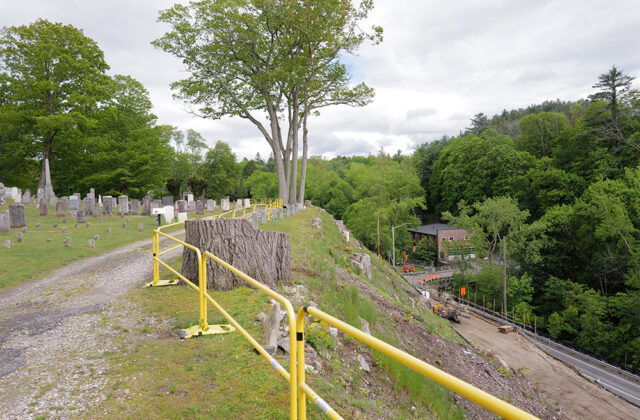
Anyone driving through Norfolk on the way to Canaan will notice major infrastructural work reinforcing the hillside above Route 44. Many trees have been cut just below the Norfolk Center Cemetery, which sits somewhat perilously atop the now-barren slope.
Norfolk Historical Society Director Barry Webber, who also serves as vice president of the Board of Managers of Center Cemetery, has been keeping a close eye on the cemetery’s historic acreage.
“We have been preparing for the Rt. 44 project for some time,” he says, “but now that it is in full swing, the cemetery landscape has completely changed. We knew many of our very mature trees were going to be removed, but nothing prepares you for the visual once they are all gone.” He notes, as well, that the few trees that do remain “now look quite precarious sitting high above Rt. 44.”
It is still unclear what will be required to secure the edge of the cemetery, but Webber suspects some kind of fencing will be necessary along its interior roadway. The State of Connecticut plans to replace the missing hillside trees with small plants that will take several years to fill in. In the meantime, Center Cemetery’s Board of Managers is focusing on the Old Colony Road border and the inner part of the cemetery.
“Last fall we added a handful of small flowering trees, Stewartia, a Sargent’s weeping hemlock, a native evergreen and several old-fashioned hydrangea,” Webber said. The board also recently launched a new website (norfolkcentercemetery.org), designed by Tom Hlas.
The Norfolk Center Cemetery was established in 1757, a year prior to the incorporation of the Town of Norfolk on Oct. 12, 1758, and is the oldest official burial ground in town. The earliest known grave is from 1762. Center Cemetery is the final resting place for many of the town’s founding families who helped shape the village. It is also unique because it is an integrated burial ground.
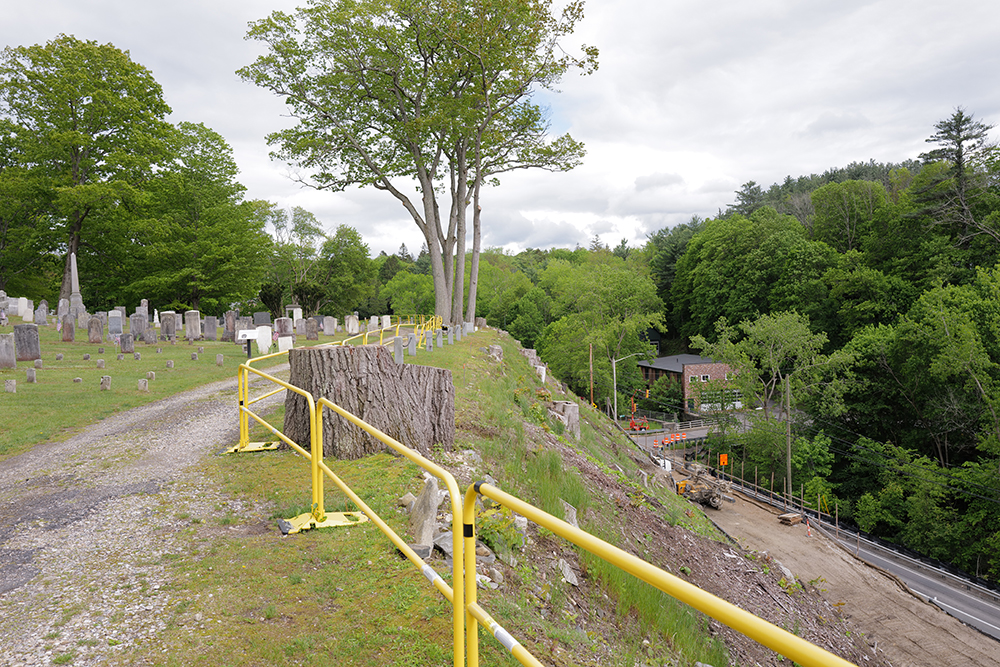
According to Webber, “The cemetery is the final resting place of many Norfolk notables and is a site on the Connecticut Freedom Trail, which highlights the grave of James Mars, the last enslaved man who was born and sold in the state. He was sold to Elizur Munger at the age of eight years; he lived with the Mungers, who gave him his freedom early.”
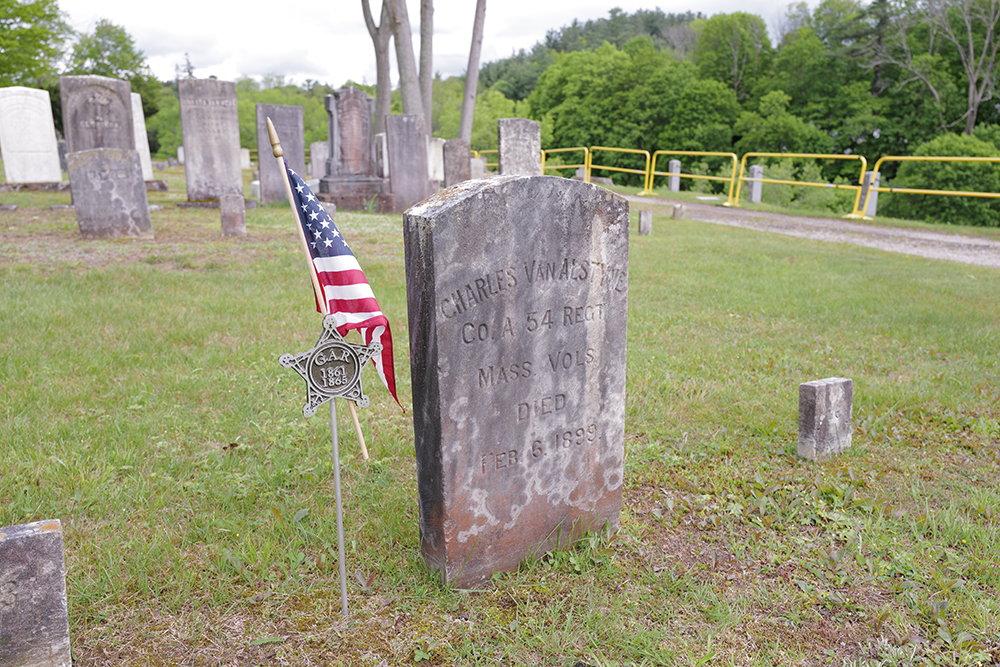
This year, the Norfolk Historical Society is focusing on Civil War history. Webber learned that several Norfolk soldiers served in Connecticut’s 29th Regiment and the 54th Massachusetts Infantry Regiment, two divisions that accepted the service of men of color near the end of the war. While the headstones all note the division soldiers served in, Webber is looking for a way to distinguish their graves. Unusually, Center Cemetery is not segregated in any way, with wealthy families such as the Battells and James Mars near each other.
“There is so much history there,” Webber adds. “My personal goal is to create a wonderful contemplative place that people will enjoy visiting, that holds and honors the memory of those who have come before us and is a place of deep comfort for those dealing with grief.”
