New Growth Unfurls at GMF
By Michael Cobb and Avice Meehan
A forest, like any ecosystem, thrives when a healthy combination of mature, young and sapling trees and a variety of species grow across different habitats and terrain. The same can be said of Norfolk’s Great Mountain Forest: a mix of veteran and incoming staff is driving new growth, both in programming and the forest itself.
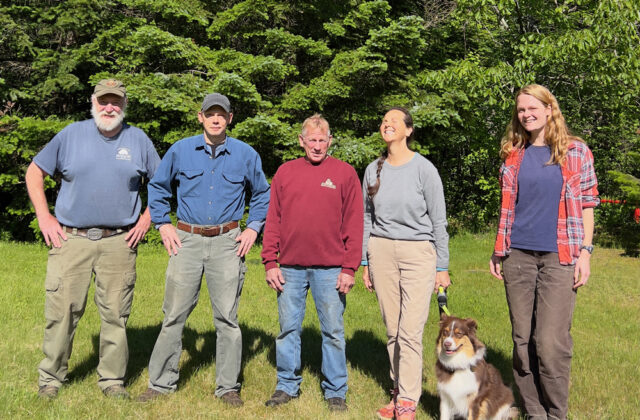
“We’re trying to specialize a little bit more on the team,” said Mike Zarfos, now entering his second year as GMF’s executive director. That has meant expanding the property management team led by Russell Russ and bringing on Kate Regan-Loomis, a recent graduate of Yale’s School of the Environment, as natural resources manager. Regan-Loomis, who has a master’s in forestry, will benefit from mentoring by Jody Bronson, GMF’s forester emeritus. She takes over from Matt Gallagher, who combined many different roles at GMF and is now an independent forester.
“This is a large property that has been under stewardship for a long time, and this past is reflected in the forest’s present. You can see the history in the ecology, and the understanding that thoughtful management can help to realize important ecological and social goals,” said Regan-Loomis. She and Bronson are partnering to lead GMF’s 77-year-old summer internship program.
Climate-smart forestry will be among Regan-Loomis’ areas of focus, thanks in part to a $50,000 grant from the Connecticut Land Conservation Council and the state Department of Agriculture. GMF will be testing approaches to removing invasive plants (think barberry) that prevent areas of the forest from regenerating and evaluating tree species that may thrive in warmer temperatures. This may mean more tulip poplars and fewer red spruce.
“We want to try and hold on to trees that are vulnerable, but we also want a cohort of trees that we know are going to make it and thrive in the future climate,” Zarfos said. “Diversity in forests tends to equate to resilience because you’re just hedging your bets.” That notion of diversity extends to GMF’s efforts to create programming that will build a pipeline of future forest expertise, beyond the “crown jewel” of its summer forestry internships.
Program coordinator Vicki Muni Nelson, a veteran science teacher, is developing a curriculum that will bring students in Grades K through 12 into the forest to augment classroom education. The work is funded by a grant from the Northwest Connecticut Community Foundation and will initially focus on
students in the school districts closest to GMF, including Winsted.
At the opposite end of the educational spectrum, GMF is using a grant from the Norfolk-based AKC Fund, to expand the Woodland Academy for landowners, land trust volunteers and forestry professionals. On July 21, for example, GMF is collaborating with Audubon Connecticut on a daylong program about managing forests for bird life that will be led by Eileen Fielding, a member of the GMF Board and director of Sharon Audubon. Other efforts in this series include a three-day management intensive (Aug. 1 and 15, Sept. 12) and land navigation and mapping (Aug. 12). Check out greatmountainforest.org for more information and to register.
New growth is also visible at the board level. John Perkins, a longtime board member and former chair, has stepped away but will remain an active volunteer working with GMF and its collaboration with the Yale School of Architecture. Dalton Dwyer, an investment advisor and former banker, has succeeded Perkins and will also serve as treasurer. Linda Bowden of Norfolk, the former Region 1 school superintendent and now deputy director of EdAdvance, has joined the board, along with Patricia Jenney of Salisbury. Jenney is a former vice president of the New York Community Trust and currently chairs the board of the Salisbury Forum
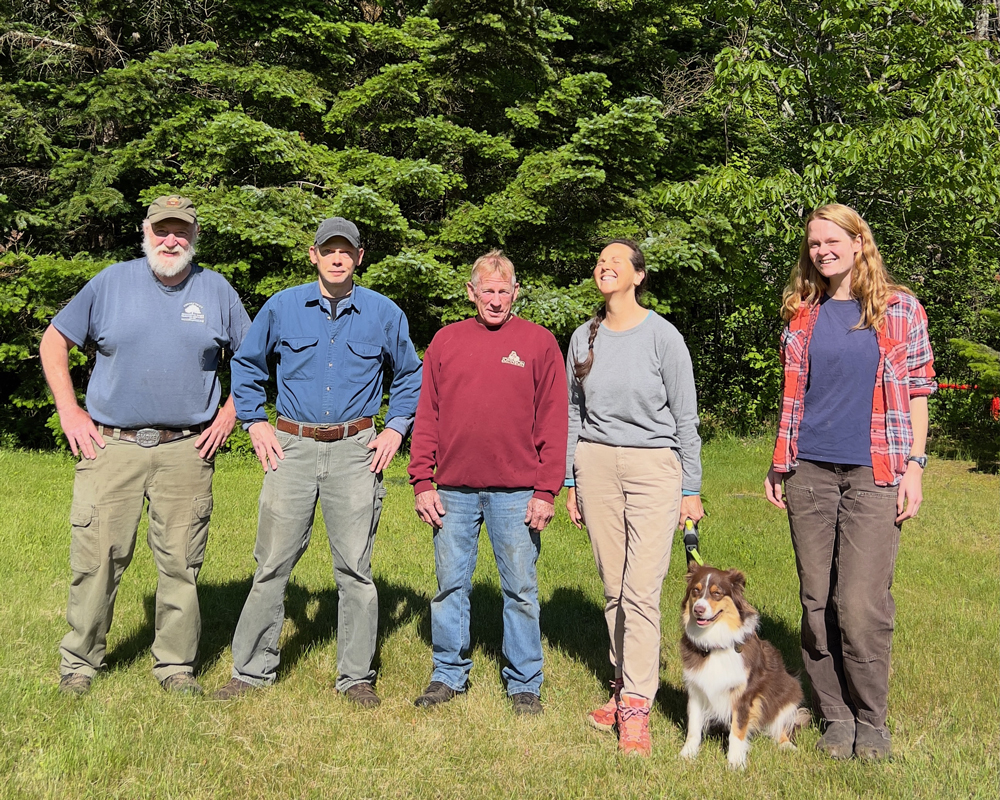
Photo by Mike Zarfos
