Protecting Norfolk’s Water Sources from a Growing Threat
Conservation lecture to raise public awareness
By Jude Mead
No one noticed at first when the thin green threads floated just beneath the pond’s surface. Most people were hardly aware even when the wispy fronds swayed in the gentle ripples of the water. Within weeks, though, this invasive aquatic plant spread its long stems and dense leaves across some of Connecticut’s cleanest water sources. It formed thick mats that choked out native plants, blocked sunlight, impaired water quality, and reduced oxygen levels in the water, affecting fish and other wildlife. Swimmers, fishermen and women, photographers and boaters all thought at first it was another harmless weed. It wasn’t. It was hydrilla, one of the most aggressive invasive species in freshwater ecosystems.
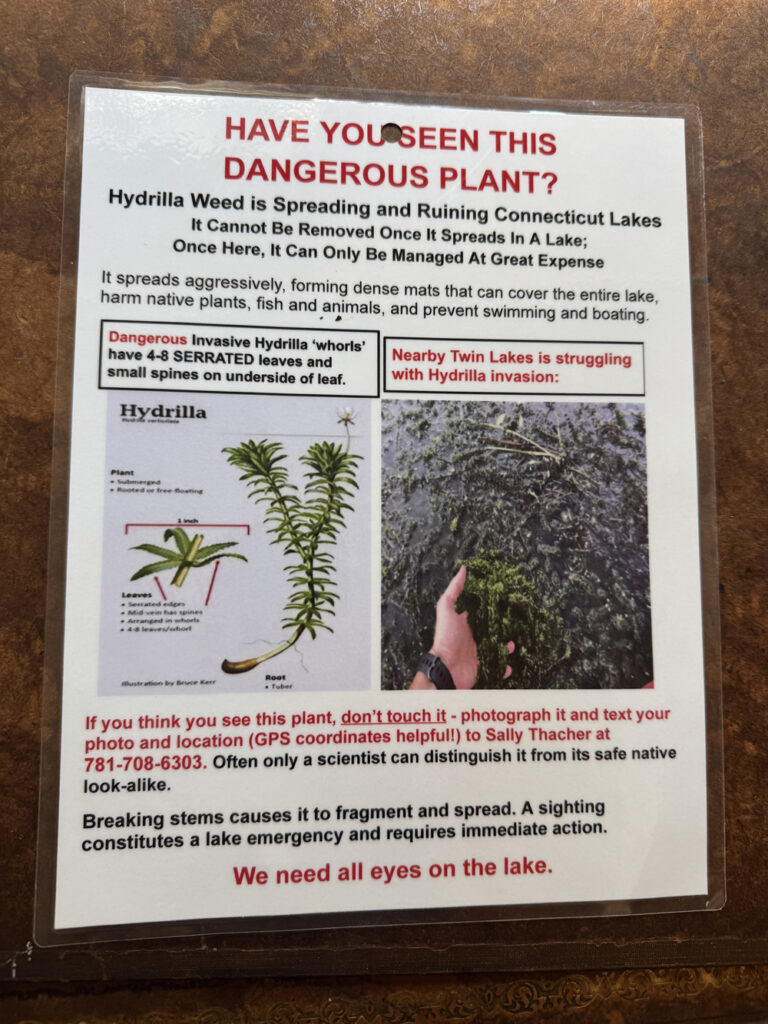
This might sound like a wild science fiction story, but it is real, and its risks cannot be overstated. Jeff Arpin, a member of the Amston Lake Health Committee in Hebron, Conn., has been researching hydrilla for years. According to Arpin, if hydrilla is left unmanaged, the results could be irreversible. “I studied hydrilla because I am concerned about keeping it out of the cleanest lakes in Connecticut such as Amston Lake. Hydrilla is a very fast-growing aquatic perennial plant and can spread by fragmentation. The smallest fragment of plant can float around a water body and form a new plant, thus spreading quickly if disturbed by recreational activities such as boating, fishing and swimming,” said Arpin.
Arpin is also aware of Norfolk’s clean water sources and the importance of protecting them. He does not consider himself an expert on hydrilla, but he does lecture on the topic to keep the public informed. “The more the public is aware of this invasive plant, the quicker it can be spotted and a proper treatment determined. One way to look at it is the more eyes looking for something different on a body of water, the better chance we have at catching the start of an infestation.”
Hydrilla was likely introduced into the United States through the aquarium trade. While it may appear to be just another underwater plant, hydrilla is considered one of the most environmentally disruptive aquatic species in the world. Once released into natural bodies of water, it will establish itself quicky due to the favorable environmental conditions. “Hydrilla can grow in a wide variety of water conditions found in freshwater lakes, ponds, rivers and streams. It can survive in water temperatures between 68 and81 degrees Fahrenheit,” said Arpin.
Arpin added that hydrilla also impacts native aquatic plants and ecosystems. “Hydrilla can grow quickly and form dense mats at the water surface. The dense mats prevent sunlight from penetrating the surface shading out other species. As the mats die and decay, the bacteria deplete the oxygen from the water, also affecting the fish population,” he explained.
According to Arpin, controlling hydrilla is complex and challenging. While there are many agencies working together to minimize the harm of hydrilla, Arpin believes that everyone has a role in protecting the surrounding lakes, rivers, and ponds. “People need to know the ways hydrilla gets introduced into a water source such as watercrafts and equipment. We can make sure anything moved between water bodies is both clean and dry including all gear, motors, wet and dry wells etc.”
To help better promote awareness of hydrilla, Arpin will give a talk at The Annual Ted Byers Conservation Lecture at Doolittle Lake on Saturday, Aug.16 in the Clubhouse at 528 Doolittle Drive at 4 p.m. This talk is free and open to the public with a wine and cheese reception afterward.
