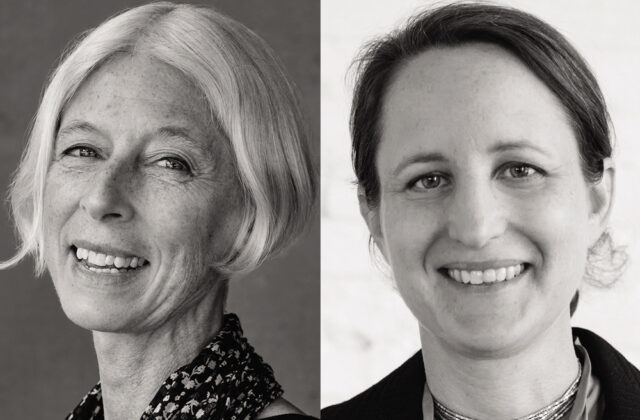
Unexpected Pairings and Inspiring Juxtapositions at the Haystack Book Festival: “Worthy and Unworthy Lives”
By David G. Troyansky
The Haystack Book Festival, now in its seventh year, has established itself as a venue for exciting unmoderated conversations between authors of recent books. Sometimes the pairings almost create themselves. This year, for example, Jean Strouse and Susan Galassi both examine art and patronage, Hampton Sides’ book on Captain Cook and Adam Higginbotham’s work on the Challenger Disaster offer stories of exploration and Caleb Smith and Jennifer Fleissner engage with American writing and culture.
Perhaps less obvious but equally exciting is the juxtaposition of Dagmar Herzog’s “The Question of Unworthy Life: Eugenics and Germany’s Twentieth Century” and Sophia Rosenfeld’s “The Age of Choice: A History of Freedom in Modern Life.” Herzog and Rosenfeld are distinguished historians of modern Europe, but they have been occupying different spaces in the historical landscape. Herzog is a specialist in 20th-century German history with particular focus on the histories of religion, fascism, sexuality and psychiatry. Rosenfeld is a specialist in French and Atlantic world history since the 18th century; she has written on language, democracy and “common sense.”
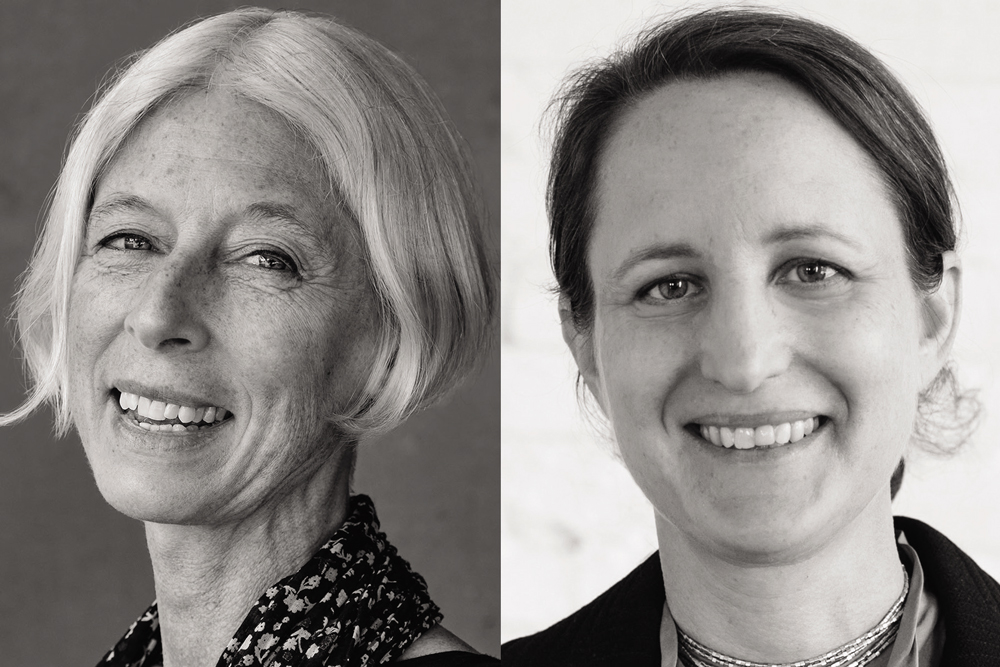
Herzog’s book on eugenics and Rosenfeld’s book on choice might not be obvious candidates for grouping together, but they both address matters of what constitutes a worthy life. Herzog’s book examines the topic in the light of debates surrounding eugenics and those concerning the care and educability of the disabled while Rosenfeld’s book seeks to encompass one of the biggest questions facing us in the present: Do we define our freedom by unlimited choice?
Herzog and Rosenfeld’s books both explore histories of ideas and how they become implemented. They demonstrate how particular ideas come to dominate the cultural landscape. In the case of Herzog, this means how Germans over a long period—the book, strikingly, devotes only one chapter to the Nazi era per se—thought about race, rights, the implementation of scientific and medical ideas, the role of professions and the state and questions of religious and moral responsibility. For her, the subject is not only the definition of worthiness and unworthiness but also who determines the lives that fall into those categories and how survivors of sterilization campaigns could or should be compensated.
Rosenfeld demonstrates how individual choices have come to characterize our default understandings of freedom, and her book ranges from religious and consumer choice to marital and political choice. Which choices lie at the center of our moral and political lives? How “real” are the choices we face in the supermarket aisle? And how in the contemporary period do we look to experts in polling to structure our thinking?
When the Haystack festival organizers were looking for a book to pair with Herzog’s—it was the first of the two to appear—they discovered that the wave of publications on American eugenics had occurred a few years ago, although the topic has reared its head in the current political environment. A blurb in the “New York Times Book Review” that drew attention to Rosenfeld’s book’s questioning what constitutes a worthy life leaped out, showing how serendipitous reading contributes to the creation of Haystack sessions.
Both books experiment with historical method, both ask big questions and both bring to light the ways in which modern citizens play a role in preserving, restricting and exercising freedom. Reading their books together prompts thoughts about the role of religion and democratic politics, the influence of experts and how human beings make all sorts of moral choices and compromises. That the two authors are also delightful conversationalists only adds to the promise of their session.
David G. Troyansky is Professor of History at Brooklyn College and the Graduate Center of the City University of New York.
The Haystack Book Festival, a program of the Norfolk Foundation, brings together writers and thinkers for unmoderated conversations that spark insight and discovery. Visit haystackbookfestival.org for the complete schedule of events and to register for reserved seating.
