Cook For Goodness Sake
America The Melting Pot
By Linda Garrettson
In celebration of the 250th anniversary of our Declaration of Independence, it seems appropriate to dedicate my food column this year to America, who we are, and what we eat. Get ready for some history lessons, and perhaps surprises that might enlighten you to what we call American cooking.
To start, let me ask, “What’s the first thing that comes to mind when you think about classic American fare?”
Hamburgers and French fries, right? What would we do without google? A search explains that hamburgers might have origins in Mongolia dating back the 12th century when they were a primitive steak tartare. Horsemen had a hard time cooking so they munched on raw meat pieces for sustenance. Trade routes sent the “tartare” to Russia, then Hamburg, Germany in the nineteenth century when it was formed into patties with onions and garlic. It wasn’t until the Hamburg “tartare” arrived in America during the Industrial Revolution that is became a sandwich named “hamburger.” This had a practical purpose be-cause wedging the meat between two slices of bread made it easier for workers to eat standing up while they worked.
As for French fries, the Incas cultivated over 300 species of potatoes. (I’d love to know what happened to those.) The Spanish conquered Peru and brought potatoes to Europe where it’s highly debated whether it was in France or Belgium that they were first fried. To further complicate the issue, “pomme frites,” in French, translates to fried apples, not potatoes. Give us credit for clearing up the issue with apples and claiming French fries as our American own.
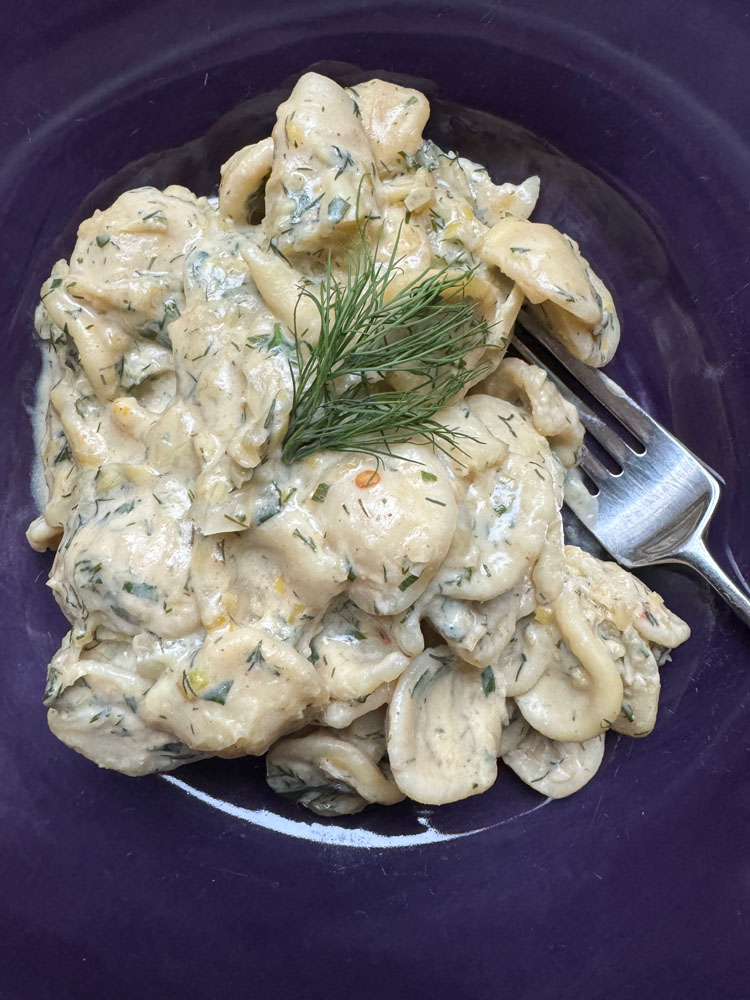
PHOTO BY LINDA GARRETTSON
If you thought you were going to get a recipe for hamburgers and French fries, you are not. My whole point here is that America, unlike every other country is the world, is a huge melting pot. Everybody, except the Native Americans, came from somewhere else. Let’s start this American anniversary journey with that beginning. Tricorn and linen caps off to the American Indian. Those original Americans lived in harmony with nature. They greeted the early settlers with indigenous wisdom based in their philosophy of Turtle Island, not an island, but simply a respect for the earth. “The Three Sisters,” corn, squash, and beans, planted together, embodies that wisdom—the corn grows fastest, creating a stalk for the beans to climb, under which the squash spreads its prickly leaves to keep moisture in the soil, and deters pests. Brilliant and delicious in combination.
Check out my October 2023 recipe for Three Sister’s soup where I share this Native American recipe.
Suggested reading list: “Braiding Sweet-grass” by Robin Wall Kimmerer, Botanist, Citizen Potawatomi Nation
The migration to America speeded up in the next centuries. At one point the Lower East Side in New York had the highest density in the world. These future Americans brought recipes with them, lots of them, from lots of places; Central America, South America, Scandinavia, Eastern and Western Europe, China, India, Southeast Asia, Africa, Caribbean, Pacific Islands, Japan, and Korea, to name a few.
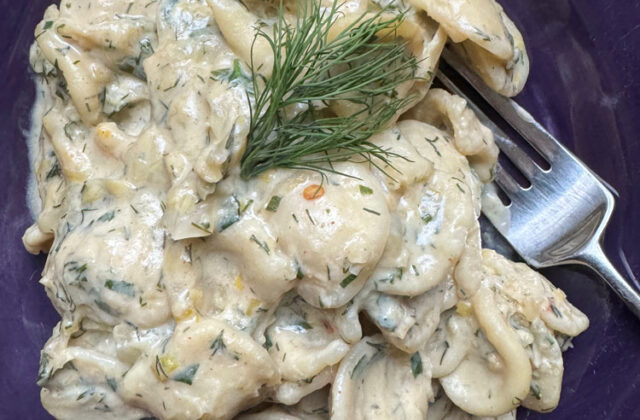
So in tribute to this long enduring American “blender” of gastronomic experiences, I offer perhaps an unlikely combination of ingredients, pasta and cabbage—a tribute to the Irish (this is the month of St. Patrick’s Day after all), and Italians. What’s not to like? In case you don’t like cabbage, here is a surprise for you, you’ll never know there is cabbage in this pasta. Note: One pan cooking not only saves on the clean up, but infuses the flavors and heightens your taste buds’ experience. Since my focus is on ethnic influences, I need to give credit to a brilliant second generation Afghani neurologist who, while she was doing a fellow-ship at Columbia by day, got a degree from the Culinary Institute at night. Cooking is her passion, it was she who taught me how to layer ingredients and raise seasonings to their fullest potential.
Cabbage Pasta
LITTLE IRISH/ITALIAN ONE PAN PASTA EARS
(Serves 2-3 as a main course)
Ingredients
- 4 cups low-sodium vegetable broth
- 3 garlic cloves, minced
- 4” piece of leeks, thinly sliced and halved
- Sea salt and black pepper
- 3-4 cups savoy (or other) green cabbage,
thinly sliced and halved - 1 tsp. cider vinegar
- Dash of crushed red chili pepper
- Pinches of sea salt
- 1/2 lb. orecchiette pasta (look for a brand
that cooks in 9-10 minutes) - 3 tbsp. nutritional yeast
- 1/2-1 cup of 0% fat unsweetened yogurt
- 1 tsp. hot or regular paprika
- 1/2 cup of fresh Italian parsley, cilantro, or
dill, chopped
Method
- Add garlic, leeks, salt and pepper
- Stir for 3-5 minutes or until translucent
- Add cabbage and more broth to moisten
- Stir over medium heat until the cabbage is
limp, 15 minutes - Add cider vinegar, chili pepper, more salt
and pepper - Raise heat and add 2 cups of broth
until simmering - Add the orecchiette, return to a low boil,
reduce heat and cover, stirring 2-3 times. - Add more broth as needed, continue
cooking for 12-15 minutes or until pasta
is al dente - Turn heat off. Stir in yogurt and
nutritional yeast
