TINY BUT MIGHTY
Norfolk Alliance Focuses on Pollinators
By Susannah Wood
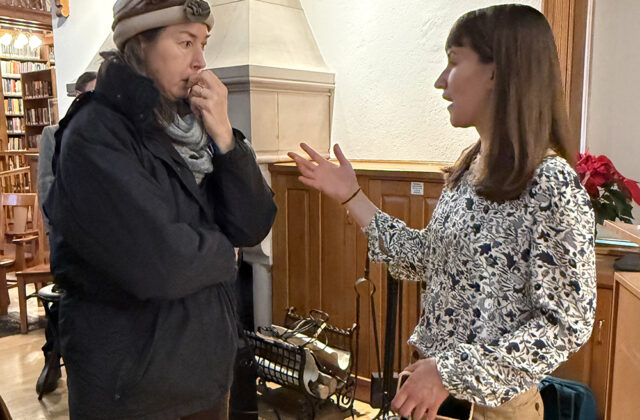
About 40 people braved the snow and slippery conditions on Saturday, Jan. 17, to hear Kass Urban-Mead give a lively and information rich program on the importance of forests to many native bees.
The forests and forestry lead at the Xerxes Society for Invertebrate Conservation, Urban-Mead, wrote her PhD thesis at Cornell University about how many bee species rely on tree pollen to feed their broods. She asked her audience to think of local forests as “meadows in the sky” and acted a little like a pollinator herself: focused, high-energy, buzzing with enthusiasm for her subject.
Worldwide, insects pollinate 85 percent of flowering plants and two thirds of our food crops, but like other insects, they are in trouble across the globe. The fruits and seeds that result are crucial food sources for countless creatures, including humans. Recent research has revealed that forest trees, which flower earlier than meadow plants, provide critical sources of pollen to many species of wild bees that emerge in early spring. Some of these bees, 388 of which are found in Connecticut, rely only on forests, while others harvest tree and spring ephemeral pollen early in the season and visit meadows and orchards later on. Her presentation was recorded and will be available shortly on the Great Mountain Forest (GMF) website.
The talk was co-sponsored by GMF as part of the winter lecture series and by the Norfolk Nature Alliance, a loose affiliation of environmental organizations that coalesced two years ago. The alliance, inspired by United Church of Christ Green Team, works together to better secure Norfolk’s ecological resources and make Norfolk a notable ecological center that enriches the lives of its citizens and wider public. The alliance includes Aton Forest, the Green Team, GMF, City Meadow Committee, the Conservation Commission and the Norfolk Land Trust.
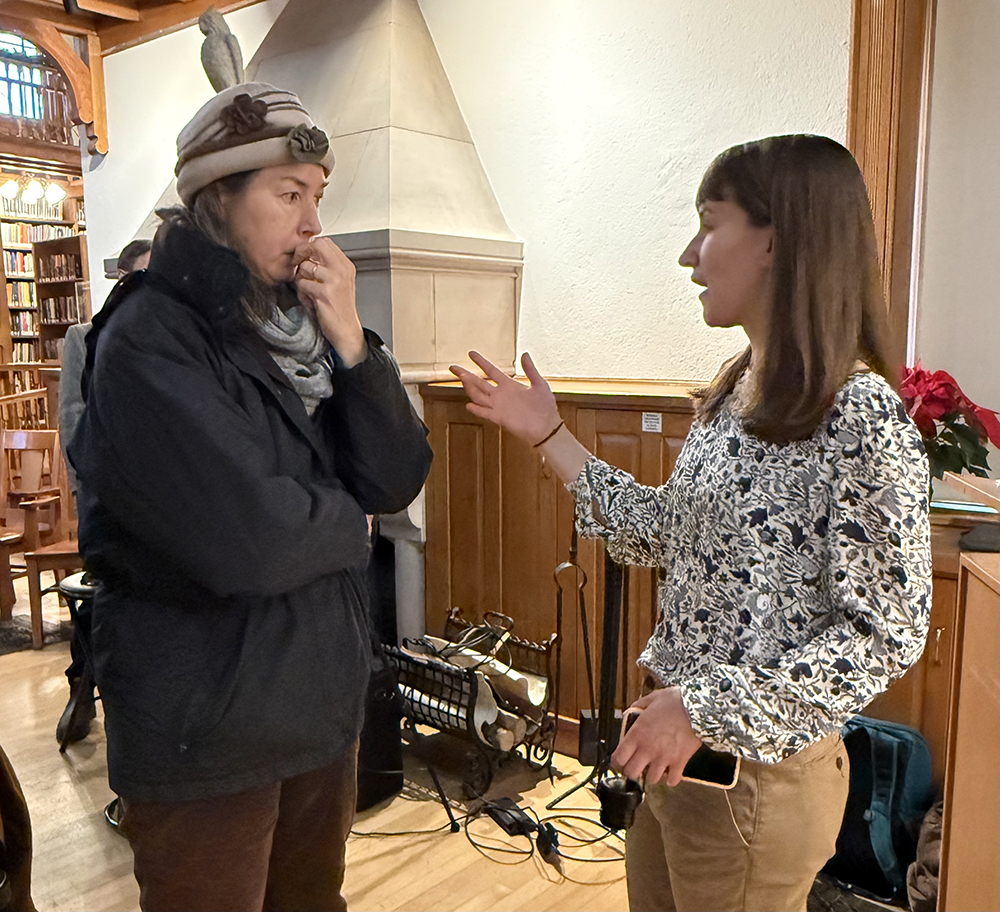
PHOTO BY AVICE MEEHAN
While residents treasure Norfolk as a place where nature thrives, it’s not immune from the problems of habitat loss, forest fragmentation, climate change, pesticides, and invasive species.
This year, the alliance will focus on pollinators and how to better support them, with guidance on invasive species removal techniques and talks about managing individual properties with an eye to making them pollinator friendly, along with films and outdoor adventures.
Small changes can lead to big results. For example, one program will explore how adding native shrubs to a landscape can represent a huge gain for many pollinators because many shrubs bloom earlier in the season when little else is flowering. These include service berries, blueberries and willows and require less care than perennials once they have settled in. The next program will coincide with the Norfolk Land Trust’s annual meeting on Saturday, Feb. 21 at 4 p.m. at the Norfolk Library. Tom Tyning, Professor of Environmental Science at Berkshire Community College, will speak on “Butterflies: What Better Introduction to Coevolution with Flowering Plants.” The public is welcome.
