Noteworthy Natives: Coral Honeysuckle
By Jill Chase
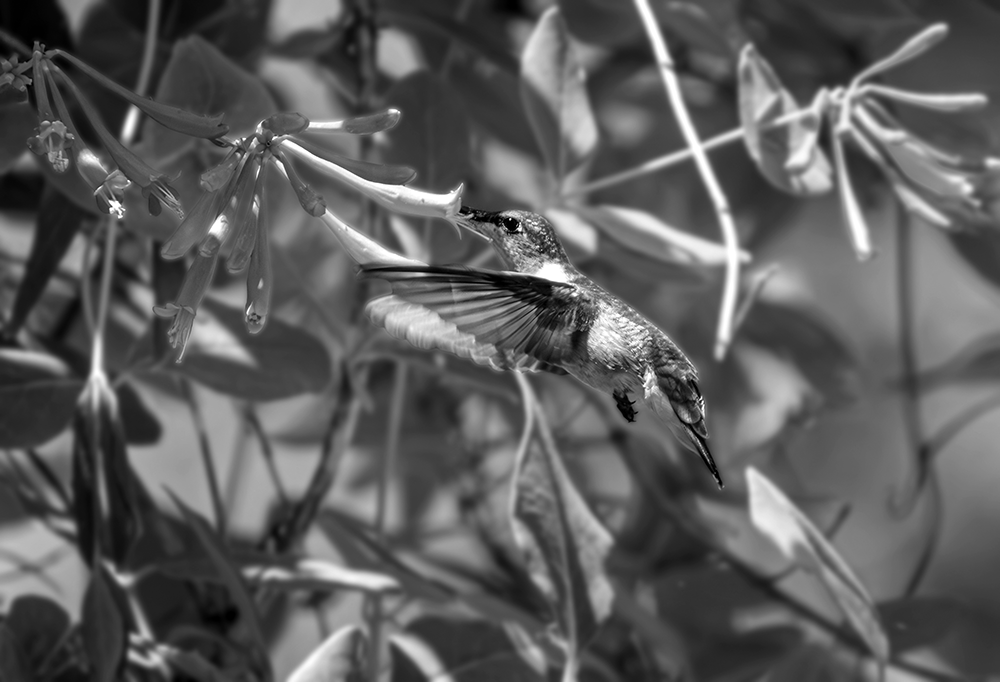
Do you go to other people’s gardens and envy all the hummingbirds they have? I did. But then I realized I had completely overlooked one of their favorite plants: The native coral honeysuckle, Lonicera sempervirens.
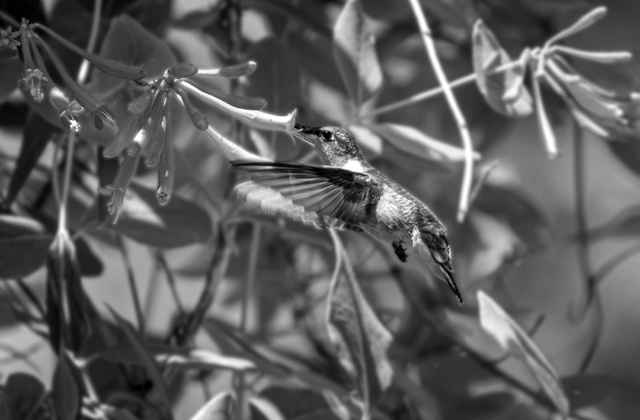
It was practically designed for humming-birds. Their long beaks and extra-long tongues are a perfect fit for the long tubular flowers. Not every pollinator can reach that sweet nectar, but ruby-throated hummingbirds can extract it with ease. The 10 to15-foot vine will cover an arbor with coral, pinky-red blossoms much of the summer so it will be an all-you-can-eat buffet for them and a visual joy for you.
Don’t confuse this vining native with the shrubby and invasive Japanese honeysuckle that spreads throughout our woodlands. Coral honeysuckle has great ecological value. The native Snowberry Clearwing Moth and the Spring Azure Butterfly use the vine as their larval host. Several long-tongued native bees and butterflies enjoy the nectar, and in the fall song birds feast on the high-fat red berries in the fall. This tough deer-resistant native prefers moist, yet well drained soil. Full sun will produce the best flower and berry show, but it can tolerate a woodlands edge. If you have a fence, pergola or arbor, this vertical climber may be the plant to up your ecological game. It packs a lot of value in a small space.