COOK FOR GOODNESS SAKE! Continuing the 250th Celebration
by Linda Garrettson
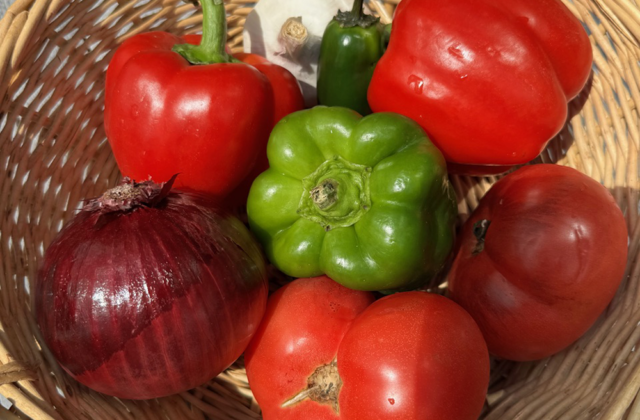
It’s September, and two months into my year-long celebration of the signing of the Declaration of Independence. Curiosity over the contributions to our American fare has not lessened. And everyone with a garden is begging me for recipes using the abundance of tomatoes and peppers.
So, how does all that link together into one article and one recipe? The answer is simple if you are me. I am the person who asks every Lyft (or Uber or taxi) driver I ride with in New York City, “What is the favorite food from your country of origin, especially the one your mother made when you were growing up?” Rarely do I get enthusiasm on the level of one particular Nigerian man. “Jollof Rice!!” he replied with sincere gusto.
For 15 minutes the driver pulled up pictures on his phone and held them so I could see them from the back seat, meanwhile steering his way through city traffic without flinching. His story was illuminated with descriptions of the ingredients and how to cook them properly, the same way his mother did. He brimmed with memories of her and of family gatherings centered around this dish. I was hooked. Eager for more details to make my recipe authentic, you can imagine how disappointed I was when the ride ended. Alas, Lyft has its rules. Standing on a congested street, at least I had some scribbled notes on the margin of the New York Times crossword page—and an idea.
Subsequent research did not quite match up with my primary source for jollof rice. Couple that with the sad truth that Americans are very busy and don’t often have time to cook the way they do in West Africa, and this food writer needed to make some revisions.
With apologies to the mother of my Lyft driver, this recipe has some shortcuts, without sacrificing the flavor.
So here you go folks, ta-da, Jollof Rice, your catchall recipe for September.
Notes
- Know the heat level of peppers. Bell, pablano and anaheim are the mildest. Medium varieties include jalapeño and serrano, while hot are cayenne and habanero.
- According to Wikipedia, West Africa domesticated rice 3,000 years ago. It arrived in America via the slave trade. By 1776, it was the fourth most valuable commodity after tobacco, wheat and fish (go figure on the fish.) Worldwide, only sugar cane and maize are more commonplace. Plus, rice feeds over one half of the world’s population.
- Jollof rice is served as a main dish, with sides of coleslaw, salad, fried plantain (dodo) or pureed black-eyed peas (moin-moin)
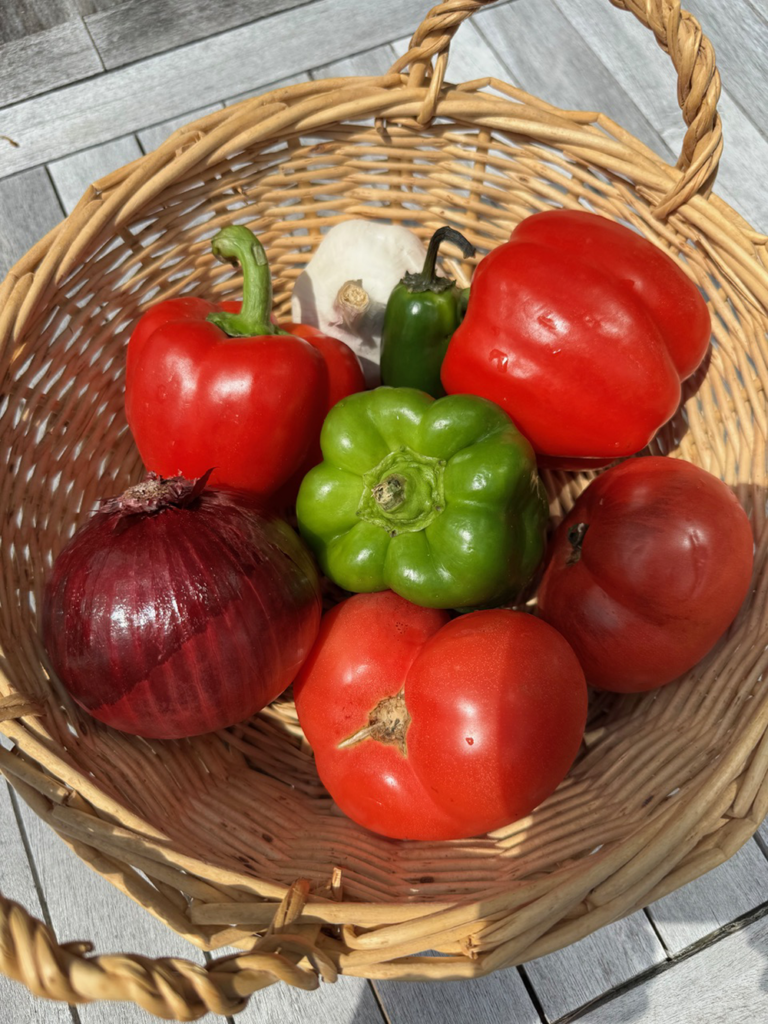
JOLLOF RICE
Ingredients
- 1” piece of fresh ginger, peeled and finely chopped or grated
- 1-1/2 cups long grain brown rice, rinsed and soaked for 1 hour or more
- 1 red onion • 1/4 tsp. turmeric
- 2 medium tomatoes, chopped • 1/4 tsp. ground coriander
- 1 small chili pepper, pablano, jalapeño or ground allspice
- 1/4 tsp. ground cumin habanero, depending on your heat level • 1/4 tsp.
- 4 cloves garlic, peeled and chopped •
- 1/2 tsp. dried thyme (or 1/4 cup fresh thyme chopped)
- 2 red peppers, seeded and deribbed, coarsely chopped
- 1 cup low-sodium vegetable broth, or water
- 1 tsp. sea salt
Method
Puree ginger, onion, tomatoes, chili pepper and garlic in a food processor. Add the red peppers and continue to puree.
Simmer the puree in a Dutch Oven for several minutes.
Add the turmeric, coriander, cumin, allspice and thyme. Stir well. Bring to a boil, add the rice, vegetable broth or water, and sea salt. Lower the heat, cover tightly and cook for 45 minutes.
After 25 minutes, remove the cover and adjust liquid. If too watery, continue to cook uncovered. If too dry add up to 1 cup more liquid. Bonus points are given for charring the bottom.
Yield is 6 cups
