Through The Garden Gate
June, Full Tilt Gardening
By Leslie Watkins
June may be the busiest month in the gardener’s calendar. It’s time to get the tender vegetables into the ground. Tomato, pepper, and eggplant starts may be planted and melons, squash, beans and cucumber seeds can be direct sown. Water new plantings deeply and consistently as needed. If only the surface is wetted, roots will grow upwards searching for moisture. Check the rainfall regularly with a rain gauge–if there is less than an inch of rain per week give the garden a good watering. Soaker hoses can really cut down on watering time for new installations. Avoid sprinklers, they do little good as much of the water evaporates before drenching the soil. In hot dry weather, containers and hanging baskets may need watering twice a day and don’t forget the birdbath.
Leslie Watkins © 2016
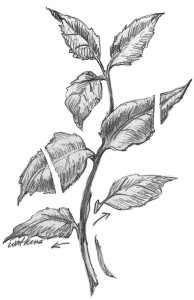
June is a great time to propagate your favorite shrubs with softwood cuttings. Good candidates are Kolkwitzia, Buddleia, Daphne, Enkianthus, Hydrangea, Japanese Maple, Lilac, Cornus, and Amelanchier. Cuttings should come from a lateral growth that is not too old and not too new, about the width of a pencil and about 5 inches long. Remove the lower leaves taking a little bark with them and gently scrape off a strip of bark from the bottom. These wounds are where the roots will grow from. Dust the wounds with rooting hormone available from the garden center and insert the stem into a pre-poked hole in a pot filled with perlite/soilless mix. Trim the remaining leaves by half to prevent dehydration and put the pot into a plastic bag. Place them out of direct sunlight and keep them slightly moist. After a few weeks gently check to see how the roots are developing. When the roots look good, transplant them into one quart pots with a 80% soil and 20% perlite mix. In fall, transplant them into a protected spot in the garden and you will have plenty of new shrubs the following spring.
Weeds are growing in leaps and bounds with the warmer weather. It is easier to pull them now while they are still relatively small and before they set seed. Get familiar with the worst ones: garlic mustard, barberry, rosa multiflora, goutweed, bindweed, buckthorn, Japanese honeysuckle and bittersweet. If you can prevent them from taking hold, you will improve your property and save yourself a lot of work later. Several in this group produce fruit that is both attractive to and readily spread by birds.
Weed the asparagus bed and mulch it well. Let the remaining stalks leaf out over the summer to provide nutrients for next year’s harvest. Also stop harvesting rhubarb, leaving at least two to three stalks per plant. Remove seed stalks as they appear. Large plants may be divided in the fall. Because of the high concentration of oxalic acid in rhubarb leaves, it can be used to clean metal, tan leather and control insects. Its rhizomes can even be used as a lightener for blond and brunette hair.
Now that you’ve accomplished your garden tasks it’s time to enjoy the fruits of your labor. How about a delicious salad of baby greens and lettuces topped with a homemade herb dressing? Place chopped herbs like tarragon, parsley, sage, thyme and garlic into a jar with a little Dijon mustard, ⅔ parts olive oil to ⅓ part balsamic vinegar, salt and pepper. Give it a good shake and let it stand for an hour or two. It may be stored in the refrigerator for up to a week.
June Chore Checklist
- Deadhead spring bulbs.
- Check the rain gauge: 1 inch per week minimum.
- Propagate shrubs with softwood cuttings.
- Wash hummingbird feeders to prevent mold.
- Leave white clover blossoms for the honeybees.
- Toss garlic mustard to the chickens.
- Use young lovage stalks as straws in your Bloody Marys.
- Make dandelion blossom fritters.
- Houseplants can go out into shady locations.
- Pick a fresh bouquet for the table.
