The Norfolk Sewer District: Past, Present and Future
Text By Ruth Melville
Photo Courtesy of the Norfolk Sewer District
The Norfolk Sewer District is 125 years old, and thanks to the recent relining project, it is ready to continue processing the town’s sewage safely and efficiently for many years to come.
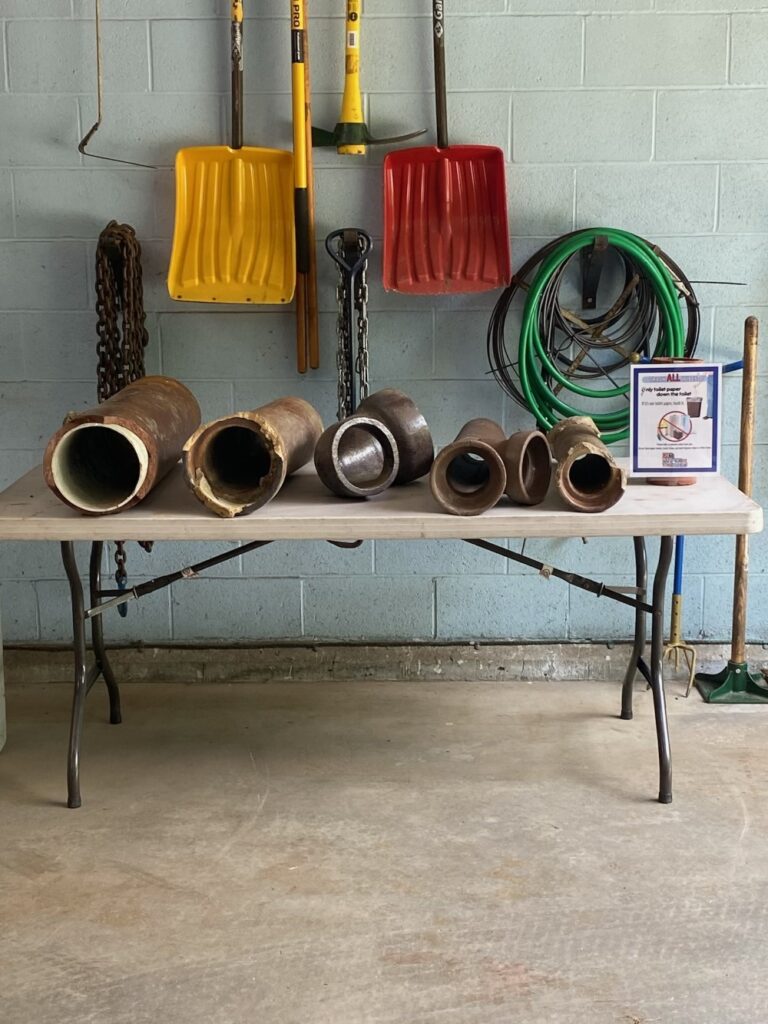
On Nov. 19, Bill Hester, superintendent and chief plant operator of the Norfolk Sewer District, gave an entertaining and informative talk on at the Hub on the many aspects of maintaining the town’s sewer system and treatment plant. The sewer district was established on Oct. 15, 1897, and the 1,491st meeting of the Sewer District Commission was held just days before the talk, on Nov. 16. Hester himself has worked for the sewer district for 21 years and is a man who clearly enjoys teaching people how the system works.
The recent relining project was long overdue. Over time, the original clay pipes, which are in three-foot-long sections, have become cracked or broken, which was allowing too much groundwater to enter the system. The plant was overburdened, with more water flowing into the treatment plant than it was designed to handle.
Previously, at this time of year there were about 140 to 160 gallons of water coming into the plant. Now that the relining is completed, only 70 to 90 gallons are coming in. Without the relining, Hester said, the Haystack Woods affordable housing project would not have been possible, since the plant could not have coped with the additional amount of water the project will generate.
There are 9.5 miles of sewer pipe in town, of which nine miles, almost the entire collection system, were relined. The pipes did not have to be dug up to undertake this work. Once a pipe was cleaned and examined via a camera, compressed air was used to push a fiberglass sock liner through the pipe from a manhole.
The entire project cost $4 million (about 45 percent of this was paid for by a federal grant from the Department of Agriculture) and took two years to complete. Only the main, or trunk, lines were relined, not the lateral pipes that go to each house. The 222 manholes in the district also were rehabbed on the inside.
There are 378 houses in the sewer district, and no pumping stations, which is very unusual (Winsted and Torrington both have nine). The water going in and out of the plant is tested weekly and monthly, and the sludge is tested three times a year.
Hester has also been involved in monitoring the sewer system after the tanker crash on Nov. 5. He said he could smell gas fumes even at the sewer plant, but they, along with Verdantas, one of the companies hired to do environmental assessment after the accident, have been testing both influent and effluent at the plant and so far have found no trace of gasoline in the water. If any gasoline were to leak into the system, it would come from the laterals, but the new lining would be fine.
What are the biggest challenges the sewer system faces on an regular basis? The main one is tree roots blocking the pipes. Sewer workers once found a root over 25 feet long in the pipe outside the Berkshire Country Store.
Most of the other problems are man-made. Top of the list are wet wipes, which clog the system because they don’t break down like toilet paper does, which Hester demonstrated by easily shredding a square of toilet tissue with his hands. “Wipes are the enemy of every wastewater facility in the country,” he said. Paper towels, facial tissue and personal hygiene wipes should all go into a trash bin, not down the pipes.
Other things that should not go into the pipes include tampons and sanitary napkins, medications, dental floss and cotton balls, bandages, cigarette butts, disposable toilet brushes, kitty litter, paper towels, candy or food wrappers, cloth, fruit stickers and plastic and rubber items, such as latex gloves.
Hester also urged sewer customers to Stop the Fog Clog, by sending no Fats, Oils or Grease down the pipes. (If you want to see how big a blockage the combination of wipes and FOG can create, Google “London fatberg,” aka The Monster of Whitechapel.) People should scrape their pots and pans into the trash before washing them and put screens in their drains to stop food particles from entering the system.
One last piece of advice from Norfolk’s sewer guru: If you’re planning any excavation on your property, call before you dig to find out whether there are any underground pipes in the area. It’s free and it’s the law.
