Review of New Firehouse Gets Underway
Wetlands, zoning and financing to be addressed
By Joe Kelly
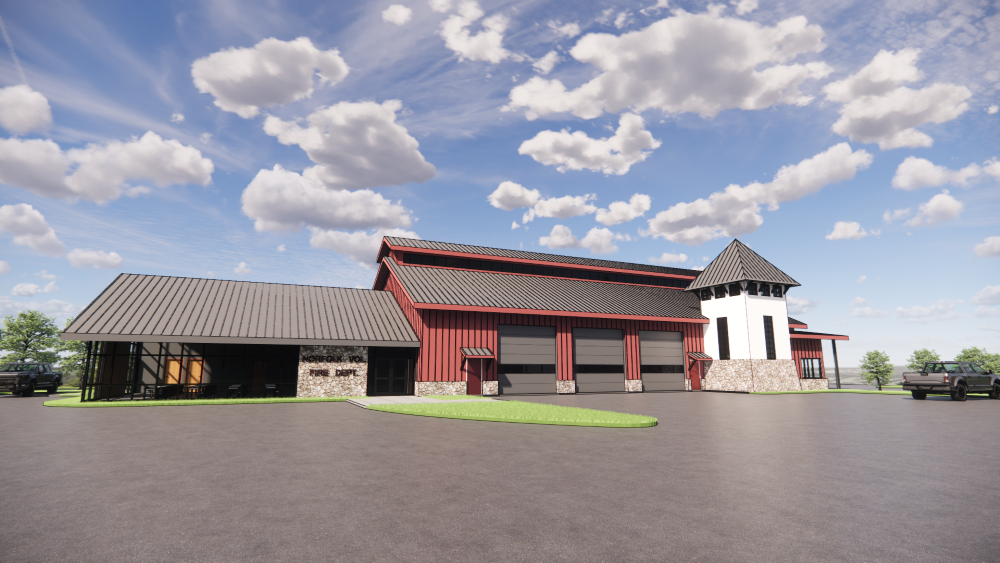
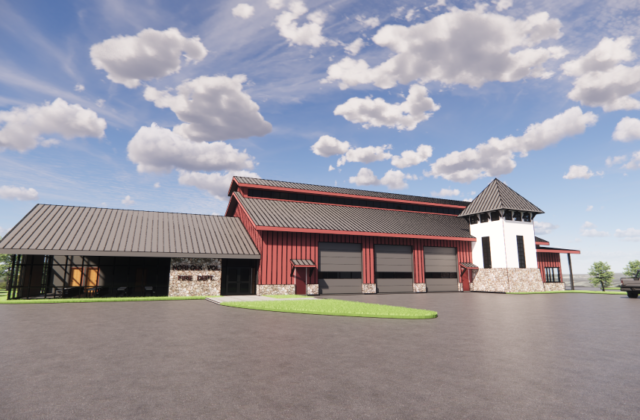
Plans for a new firehouse for the Norfolk Volunteer Fire Department (NVFD) are under review by various town boards and committees, the start of a months-long process to reach a decision on the largest new public facility to be considered in Norfolk in years.
Under the proposed plans, the firehouse would remain in the same area off Shepard Road but would be more than twice the size: 10,000 square feet vs. 3,800 square feet.
The new building is intended to address long-standing concerns that cramped quarters and outdated systems in the current firehouse put the town’s volunteer firefighters at risk, impede response times and are out of compliance with a wide range of health and safety regulations.
In addition to a new building, the area surrounding the firehouse—now an expanse of grass, weeds and pavement—would also undergo a major makeover, with changes in traffic flow, parking, lighting and landscaping. There would be places for the firehouse bell and 9/11 memorials and a path (and parking) for the nearby City Meadow. Once the new building is complete, the old firehouse would be torn down.
The new plan must first navigate a gauntlet of approvals: the Inland Wetlands Agency, the Planning & Zoning Commission and the Board of Finance, as well as a vote at a town meeting called for that purpose. Financing would likely include some combination of state and local monies and community fundraising. Current estimates suggest a total price tag of at least $5 million.
Firehouse Plans Go Back 10 Years
Norfolk has been here before. In 2011, $35,000 was spent on a needs assessment and initial architectural sketches to expand the current firehouse, but the plan was shelved amid budget concerns. The price tag back then was put at $2.7 million.
The idea was reactivated in 2020, in part after Storm Isaias knocked out power in town for days. When dozens of crews, some 150 to 250 linemen, descended on Norfolk to help restore power, the firehouse strained to fulfill its role as a makeshift command center.
Shortly afterward, the town allocated $125,000 for new plans, and the fire department retained the Hamden architectural firm Silver/Petrucelli & Associates, which has worked on fire stations across Connecticut.
Inadequacies in Current Firehouse
Norfolk’s current firehouse was designed more than 50 years ago to house fire trucks and little else. Today’s trucks are bigger, and there are more of them. There are also more firefighters, who use more safety gear, undergo more training and are asked to do more. The NVFD responds to a wide range of incidents beyond fires—motor vehicle accidents, medical assists, downed wires, animal rescues, severe weather standby and more.
In a typical year, Norfolk’s approximately 50 volunteer fire fighters respond to 150 to 225 incidents, often three to four per week, amounting to about 2,500 hours of active-duty time or 50 hours per firefighter per year.
A Peaked Roof and More
The plan for the new firehouse calls for a one-story structure with a peaked roof, a windowed, vaulted ceiling and a two-story “bell tower” for hanging hoses to dry. According to David Stein of Silver/Petrucelli, the design is intended to take cues from other buildings in town while accommodating the spatial and functional requirements of a firehouse.
The largest portion of the square footage in the new building is devoted to the six trucks. Today’s safety requirements require far more space around each vehicle. There would now be six individual vehicle bays, three opening onto Shepard Road and three exiting via the east side of the building.
Space has been allocated for equipment lockers and larger storage spaces. Currently, gear is stored on the floor (a tripping hazard) and on the trucks. This must be unloaded before the truck can depart. There will also be a 1,400 square foot meeting/training room, a kitchen/pantry, a radio dispatch room, a decontamination room, rest rooms and offices.
The building is being designed with up-to-date exhaust and ventilation systems, as well as a defined separation between administrative/meeting areas and where the trucks are parked in order to block the spread of the trucks’ diesel exhaust throughout the building, a major complaint of the firefighters and a health hazard.
Energy-efficiency features, including solar panels, are planned. An additional smaller structure would house the emergency service trailer and other equipment.
Wetlands and Zoning Evaluations
Because portions of the land under both the existing and planned firehouse qualify as wetlands, Will Walter, an engineer with the firm Benesch, retained by the NVFD, attended the Inland Wetlands Agency’s Sept. 5 public hearing to present a plan for capturing, filtering and releasing water flowing off the roofs and parking areas. During the meeting members of the public spoke for and against the proposed plan. The Wetlands Agency decided to request a Phase 1 Environmental Site Assessment and a “functions and values” review to get more information on the role this site plays as a wetland, and the hearing was continued to Oct. 2, at 7:05 p.m. at Botelle School.
Hearings before Planning & Zoning are expected to focus primarily on how the site is being used, as well as issues such as lighting, impact on neighbors and the potential need to transfer land from the town to the fire department to accommodate the larger building.
Decisions Next Year?
Deliberations by the Wetlands Agency and Planning & Zoning are not likely to be completed until next year.
Assuming agreement is reached on a plan to move forward, blueprints and site plans would have to be developed and bid out and financing arranged. According to First Selectman Matt Riska, the town must retire its existing debt before it can consider financing a new firehouse.
Approval of a final construction plan could take well into 2024, if not longer, with construction expected to take 18-24 months.
