Tree Cutting by Town Raises Concerns
Tirrell seeks better management after incidents on Ashpohtag and Doolittle
By Joe Kelly
Right now in Norfolk, as elsewhere, trees are disappearing on an unprecedented scale. Borers and blight are killing ashes and beeches. Sugar maples, normally adapted to cold climates, are struggling because of warmer temperatures. Hemlocks are being attacked by the wooly adelgid. Oak and black cherry are seeing reduced regeneration. The extended droughts we’ve seen in recent years continue to take their toll.
Earlier tree losses—such as the death of the chestnut and elm trees—were typically sequential, occurring one at a time over the course of decades. Now, as the Connecticut Agricultural Experiment Station has noted, multiple dominant trees are weakening together, causing losses that are deeper, broader and occurring more quickly than previous declines.
This raises concerns about the future of forested land, as well as practical questions about how to manage dead or dying trees located in populated areas. Just leaving them to fall over on their own risks blocked roads, extended power outages, property damage and even fatalities. For example, in the early evening of Oct. 25, 2024, a tree fell on a pickup truck traveling east into Norfolk on Route 44, The driver was killed; a passenger was seriously injured and downed power lines caused nearby drought-stressed vegetation to catch fire. But should concerns over public safety or potential property damage become a default justification for large-scale tree removal? That question was highlighted by two incidents—one on lower Ashpohtag Road and the other on Doolittle Drive. Both involved tree removal managed by the town’s Department of Public Works (DPW) and led to neighborhood complaints, wetlands concerns, a cease and desist order and the potential for legal action. Managing the response to both incidents is now the responsibility of Norfolk’s new First Selectman Henry Tirrell and he is adopting a conciliatory tone, including issuing a formal apology. (See Letter to the Editor, page 19.) “I’ve had a lot of discussion on both sides and know this is a really intense issue,” Tirrell said. He pledged to establish a policy that addresses safety concerns, prevents over cutting and also provides advance notice and communication with nearby property owners. “Better communication is half of it,” he said.
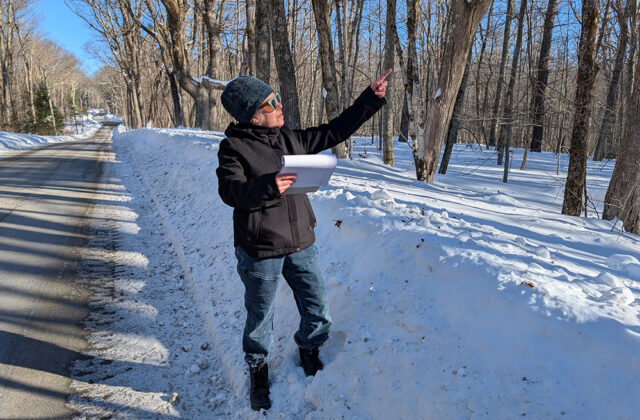
The incident on lower Ashpohtag Road occurred in mid-November when a tree removal contractor working under the supervision of Norfolk’s DPW began cutting down about 100 trees on both sides of the road near Route 44, an area that includes officially designated wetlands. No information was provided to establish why this area was made a priority for tree removal at this time. Notice was not given to the Inland Wetlands Agency; Stacey Sefcik, wetlands enforcement officer or abutting property owners. Taken aback by the extent of the cutting, residents began reaching out to town officials including Hartley Mead, chair of the Inland Wetlands Agency. Mead visited the location, determined that there might be an impact on wetlands, and issued a cease and desist order that stopped the work until it could be reviewed.
The incident on Doolittle Drive involved a 19.2-acre tract of land owned by Martha Klein, an active environmentalist and former Conservation Commission chair. Klein bought the property to keep it permanently undeveloped using an easement owned by the New England Forestry Foundation (NEFF). When a representative of the NEFF joined Klein for a routine annual inspection of the land, they were shocked to discover that extensive tree cutting had taken place both within the right of way along the roadway and farther into the property.
The tree removal was also undertaken by a contractor working under the supervision of the DPW. Klein, who was never notified, commissioned a formal survey and arborist report that was completed in December. It showed that 32 trees had been cut down, including more than 20 beyond the right-of-way. Getting to those trees involved moving boulders and knocking down a portion of an old stone wall.
Klein made it clear that neither she nor the NEFF wants to sue the town or be reimbursed for the timber value of the trees that were improperly taken from her property, even though Connecticut law allows for triple penalties in such a situation. “I’m not against the town taking down dangerous trees,” said Klein. “I’m against this kind of aggressive cutting.”
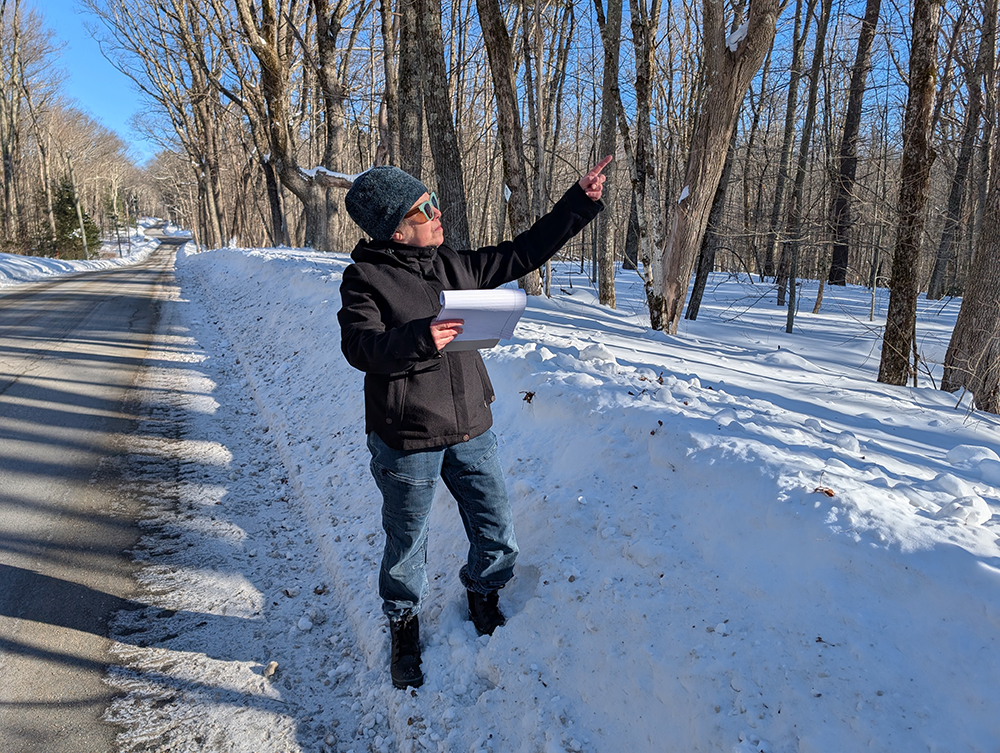
At its December meeting, the Inlands Wetlands Agency discussed ways to manage tree removal in wetlands areas. One option discussed was to have the DPW develop a five-year plan of tree clearing that the wetlands agency could review and approve in advance, eliminating the need for individual permits except for large projects such as those that involve clear cutting. Sefcik said that she ultimately allowed the work on Ashpohtag to be completed without a wetlands permit because the tree removal was selective and did not involve clear cutting.
Klein strongly urged the town to consult experts in roadside ecology to help craft a tree management solution. “Having lay, untrained people making these kinds of decisions is absurd,” she said.
Another potential source of information is Eversource, which does extensive tree management to protect its power lines. Eversource maintains a strict inspection schedule so that trees near every overhead line get looked at a minimum of once every four years, according to Jenna Turner, vegetation management manager at Eversource. When trees are identified for removal, a formal document is prepared that gets reviewed and signed by all parties, including abutting property owners.
Troy LaMere, Norfolk’s Public Works Supervisor, encountered in the Town Hall hallway, was characteristically jovial and unperturbed but somewhat chastened by the recent controversies: “I should have notified Harley,” he said. LaMere has an extensive list of areas where he believes trees need to be taken down including Parker Hill Road, Schoolhouse Road and Westside Road. “I won’t do anything until the trees are marked for removal,” he said.
Right now, budgetary constraints will keep the town from cutting down more trees. Norfolk invested $48,000 in tree removal by outside companies last year and Tirrell said no more will be spent unless it’s an emergency. A lingering question involves the role of the town’s unpaid tree wardens: one is Star Childs and the other is Matt Klimkosky, who worked as an arborist for many years. He holds an arborist’s license, which is a state requirement for town tree wardens. Klimkosky said he offered to help educate town employees on what it takes to identify trees that are compromised and pose a danger.
