Noteworthy Natives: Arrowwood Viburnum
By Jill Chase
For some, a mass of viburnums in bloom on the woodlands edge rivals the beauty of any formal garden around. The fresh white flowers on green foliage let you know that the spring garden season is well and truly on. There are several good varieties of viburnum—some produce blooms like snowballs, while others resemble the flowers of hydrangeas, each with a little different leaf shape or stature.
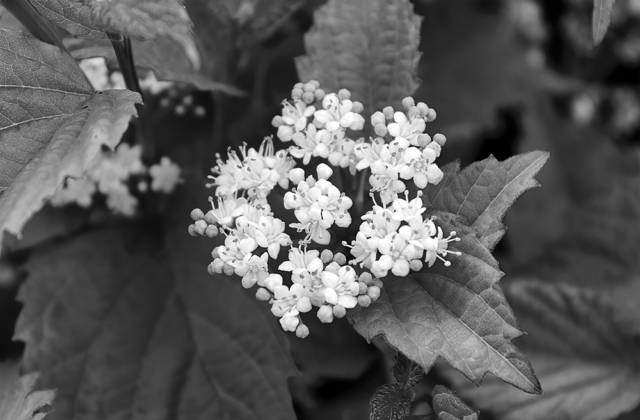
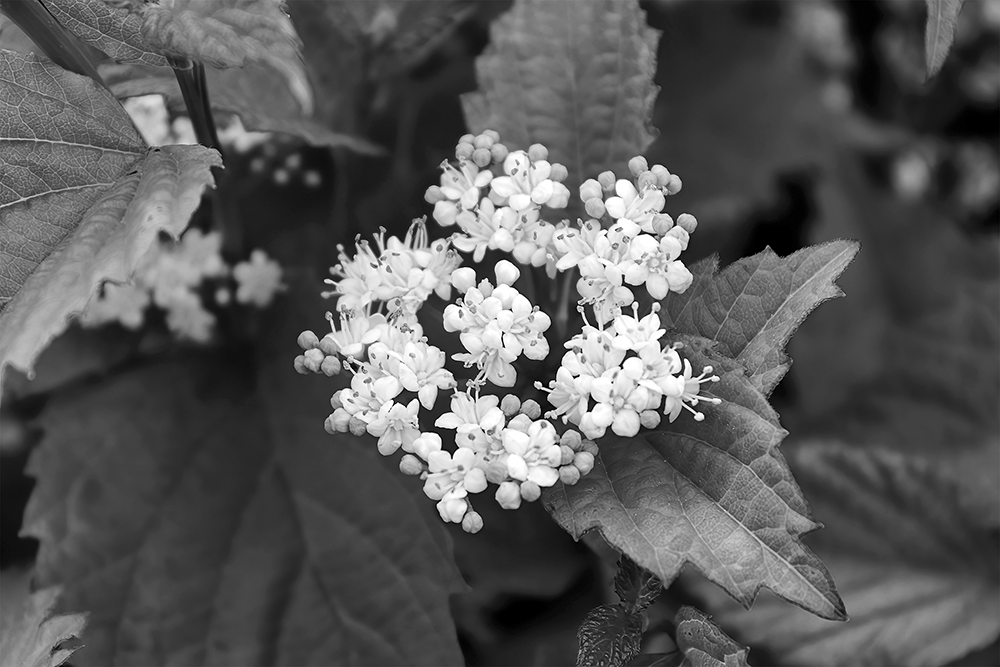
Arrowwood viburnum (Viburnum dentatum) is a lovely, easy-to-grow plant. The white flower clusters resemble the center of a lace cap hydrangea bloom. This umbel flower shape is a favorite sort of landing pad for butterflies of all kinds. In fact, the arrowwood viburnum supports over 100 types of butterflies and moths, as well as being the larval host to the azure butterfly and the hummingbird moth. Native bees will also enjoy sipping from the tiny nectaries. What a pollinator powerhouse!
In the autumn, small dark blue, high fat, nutrient-dense berries will feed the birds at a time when many other berries are done. By weight, the berries are 41 percent fat, which is just what you need if you are about to fly south. The dense structure of the shrub also produces excellent nesting sites.
Arrowwood viburnum has a graceful arching branch structure and grows to a height of six to 10 feet. It will sucker at the base and grow denser over time. Serrated green leaves will turn a dramatic deep burgundy in the fall, adding another season of interest.
It’s at home in a garden or woodland’s edge and doesn’t need much from the gardener. It does well in full sun to dappled shade, although people say the fall foliage is better when the plant is sited in more sun. Average-to-moist soil is fine, and it doesn’t need extra nutrients. A young plant may need to be protected from deer, but once it matures it is thought to be fairly deer resistant.
Arrowwood viburnum has been included in the restoration of Norfolk’s City Meadow and can be found in the shrubland area to the east of the boardwalk. In sum, if your garden style is “easy elegance meets enthusiastic naturalist,” then this is the plant for you.
