Tracing the Dudley Legacy
Family history and the truth behind Dudleytown
By Jude Mead
The Dudley name, with roots stretching back to 14th-century England, carries with it a long and often dramatic history. For Susan Dudley of Winchester, that legacy has been a lifelong source of curiosity—particularly her family’s connection to Dudleytown, the long-abandoned settlement hidden within Cornwall’s Dark Entry Forest.
Much of what she knows, said Dudley, has been passed down through family stories. Her grandfather James Dudley, a longtime pharmacist and co-owner of Ivery & Dudley Pharmacy in Winsted, and her Aunt Carole often shared tales of their ancestry with her.
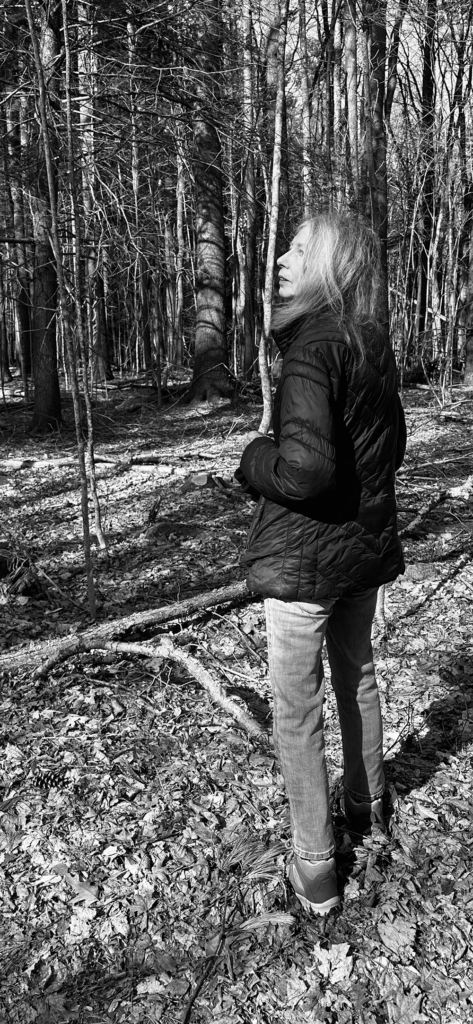
Photo by Jude Mead
“I was told that our ancestor Edmund Dudley was beheaded for trying to overthrow the King of England,” Dudley recalled. “His son was also executed. Fearing for his life, Edmund’s great-grandson, William Dudley, fled England for America, where he and his family eventually settled Dudleytown in the early 1600s.” Like many stories about Dudleytown, however, that account blends history with legend.
Gary Dudley, author of “The Legend of Dudleytown,” has spent years examining those claims. A historian and genealogist, he approached the subject with a focus on documented evidence rather than folklore. His research suggests a different timeline. He noted that Dudleytown was founded in 1747, with early settlers that included Gideon, Barzillai and Abiel Dudley. There are several versions of how Dudleytown began, as Dudley noted in his work, raising questions about which were rooted in fact and which have grown through generations of storytelling.
A common thread in all accounts was that Dudleytown struggled from the start. The soil proved difficult for farming, and by the 19th century, many residents began to leave in search of more fertile land while others departed because of a series of tragedies such as sickness and unexplained deaths that fueled the town’s reputation. By the late 1800s, Dudleytown’s population had dwindled. Whether due to economic hardship, isolation or unsettling events, families steadily left the area. By 1900, the settlement was deserted. Some contributed the sudden departure to tales of curses and hauntings, but more practical explanations point to poor farmland, geographic isolation and the natural hardships of rural life.
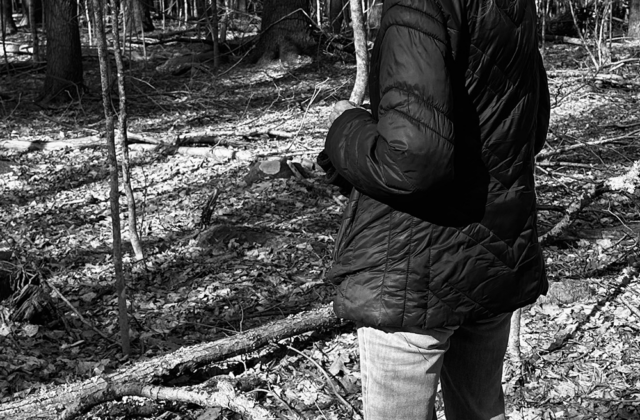
For Susan Dudley, the mystery was part of the allure. “When Grandpa Jim first shared his stories about Dudleytown, I was in high school—and at that age, you’re curious,” she said. “A friend and I decided to try to find it.” The search proved more difficult than expected. The narrow, nearly hidden entrance blended into the dense woods off Dark Entry Road, requiring multiple passes before they located it. “The hike in was treacherous and dark, even though the sun was shining,” she said. “You understand right away why it’s called Dark Entry.”
What they found, however, was far from the dramatic images painted by local lore. “When we got there, it was mostly a few cellar holes and fallen trees,” Dudley said. “There wasn’t much else to see.”
Stories of hauntings still circulate in the region and continue to contribute to Dudleytown’s shadowy reputation. But Dudley herself remains unconvinced. “I didn’t get any sense that it was haunted or experience anything unusual,” she said. “It’s more fun to read the stories and history than it is to go tromping through the woods.”
Today, access to Dudleytown is strictly prohibited. The land is privately owned, and officials have closed entry to protect both the fragile environment and the safety of would-be visitors. Those who attempt to enter risk legal consequences, as well as the hazards posed by the rugged terrain.
While historians continue to work to separate fact from fiction, Dudleytown endures as a place where the two remain closely intertwined. For descendants like Susan Dudley, the site represents not just a mysterious chapter in local lore, but a tangible link to a family history that continues to evolve. “Even if not all the stories are true,” she said, “they’re still part of the Dudley family.”
