IT’ S ONLY NATURAL: Putting the Brakes on Bittersweet: a September Strategy
by Susannah Wood
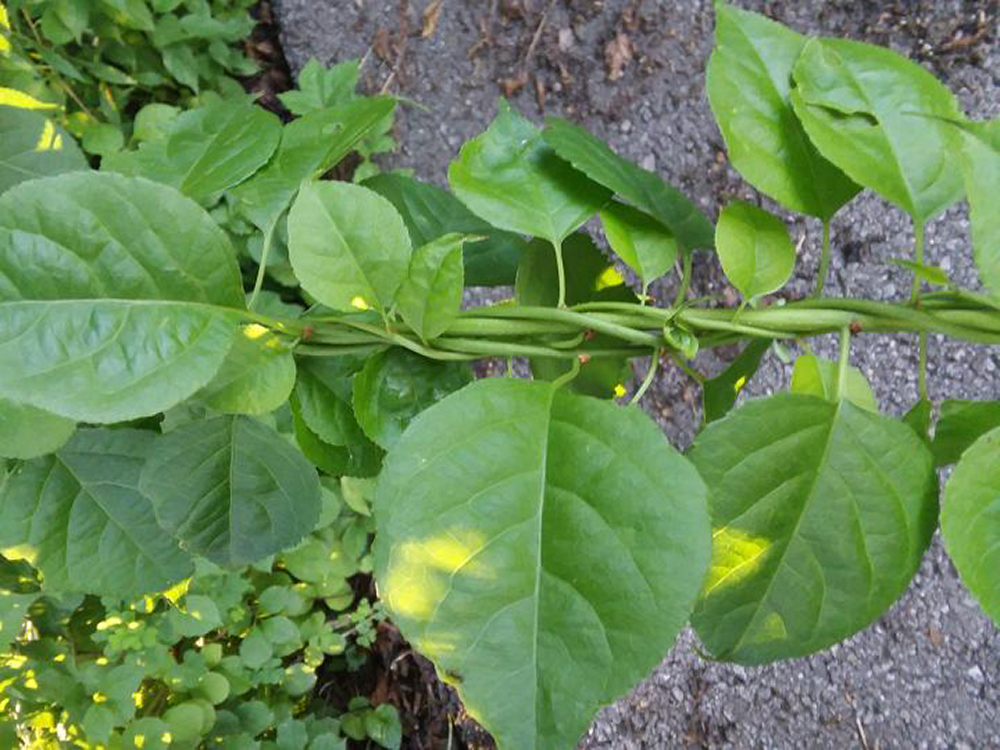
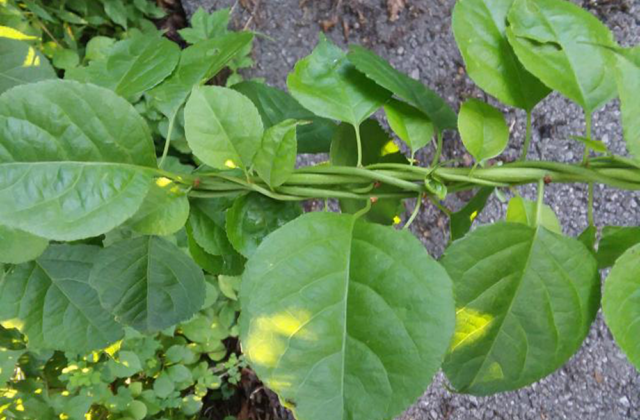
Over the last couple of years, Oriental bittersweet (Celastrus orbiculatus) has increasingly taken hold on Norfolk’s roadsides. Anyone who has driven back and forth to New York City over the years has seen how, unchecked, the vines can envelope trees, girdle and kill them, and leave behind a wrecked woodland. A member of the nightshade family, the vines spread via their deceptively charming orange-red berries, which the bird sand small mammals feast on and then spread the seeds to new sites.
While the Norfolk public works crew mows along the town rights-of-way, keeping those vines in check, there is a kind of no-man’s land between those mown areas and the borders of various privately owned properties. It’s easy to see vines crawling up into the roadside trees and, if nothing is done, those trees will die and create roadside hazards, diminish ecological value and leave an ugly mess. And it won’t stop there, as bittersweet can spread horizontally through grasses and shrubs as well.
What to do? It’s so easy for even the most enthusiastic invasives warrior to get overwhelmed. But there’s strength in numbers. Early to mid-September is a great time to gather a group of neighbors together to just cut back the vines about one to two feet from the base so that the berries do not mature. This won’t kill the bittersweet but it will reduce new infestations. Even a small group, working along each road, would make a huge difference. Repeated cuttings over the years will reduce the plant’s vigor but only if done on a continual and persistent schedule.
To kill the plant itself, the most effective strategy is to sever larger vines about four inches above the ground and then dab the cut end with or a high concentration of tryclopyr or glyphosphate, using an applicator called a buckthorn plaster or sponge paintbrush. Add some food coloring to see which stems have been treated. The actual amount needed is very small. When the ground is wet or in spring, smaller vines can be hand-pulled but continue to monitor the area for new sprouts. Any vines cut down that have berries should be taken to the burn pile at the transfer station.
Contact the Norfolk Conservation Commission invasives email at NCCinvasives@ gmail.com with questions or for more guidance. Join the Conservation Commission when they meet at Town Hall on Saturday, Sept. 12, at 9:30 a.m. for a community bittersweet session on a town road.