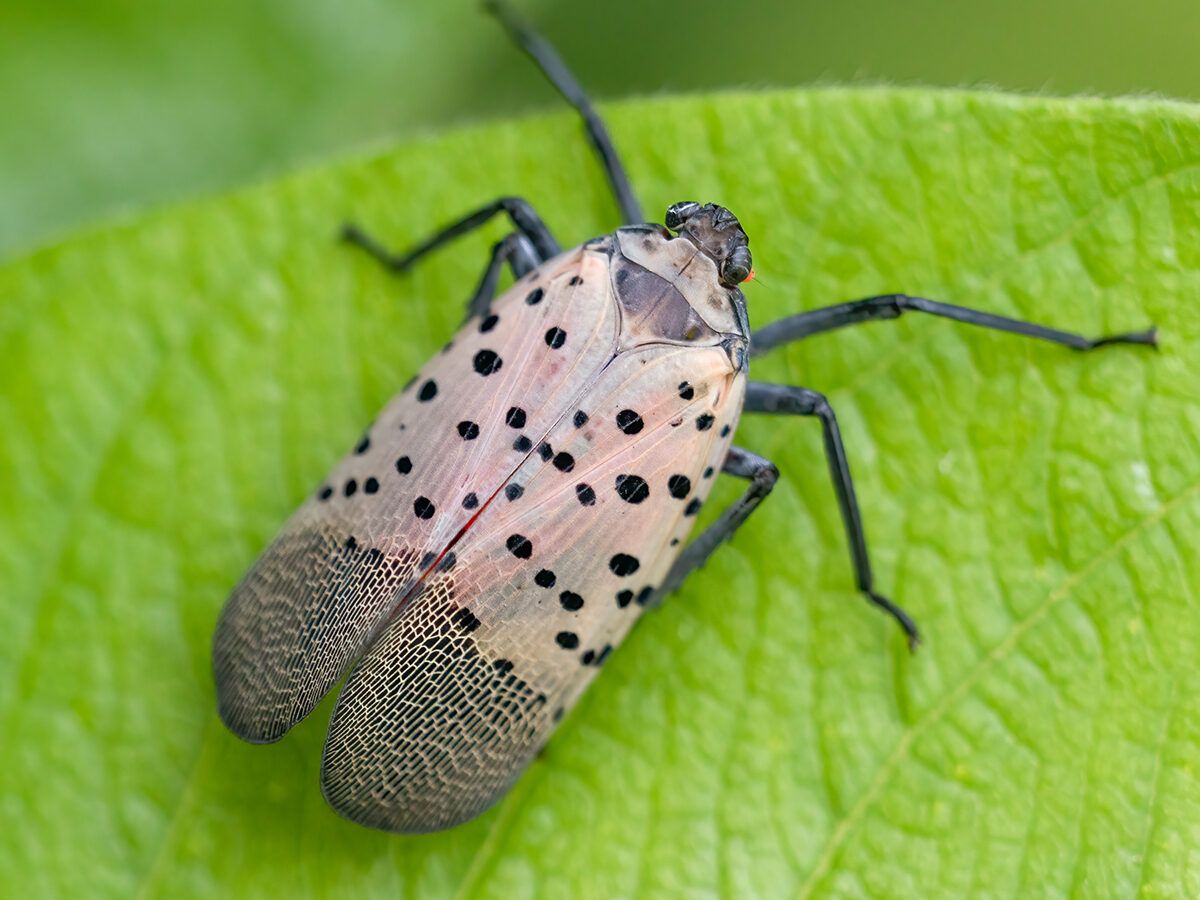
Lantern Flies Have Arrived

By Avice Meehan
The first recorded sighting occurred this past summer at Dennis Hill State Park. But make no mistake: spotted lantern flies (SLF) are popping up all over Norfolk, in locations that range from Great Mountain Forest and Westside Road to Botelle Elementary School and Loon Meadow Drive.
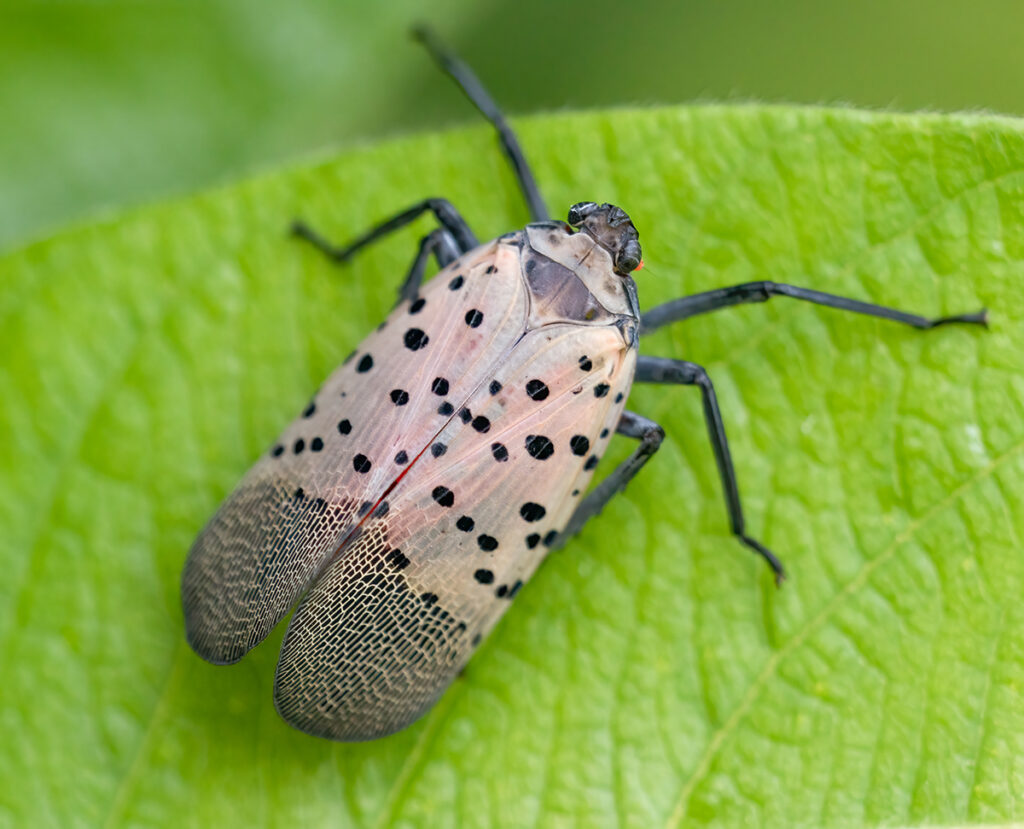
Reports filed with the Connecticut Agricultural Experiment Station (CAES) have placed them in Colebrook, Salisbury, North Canaan, Winsted and New Milford, where a satellite infestation was discovered in 2023. Some 23,000 in all have been filed with the state, although researchers place some caveats on the total because not every report is accurate. The glamorous bugs—which suck on sap like aphids and can jump out of reach—prefer another invasive, tree of heaven or Ailanthus altissima. They have proven to be adaptable eaters, however. The SLF has disrupted vineyards and developed a taste for trees such as maple, walnut and birch by burrowing under the bark to access sap. When massed on a tree, they produce a sticky residue called honeydew—they are designed to filter large volumes of sap. It eventually develops a vinegary smell and also attracts lots of insects.
“The spotted lantern fly is now mating. They have been feeding hard and will now be laying their egg masses,” said Claire Rut-ledge, an associate agricultural scientist at CAES. Rutledge said it will take three successive days with temperatures below 28 degrees to kill off the mature lantern flies.
Their path through Connecticut can be mapped along major transportation corridors such as I-95, Rutledge said. The expansion of a big cluster in Danbury can be tracked along Route 7 and others along Route 8 into Torrington or along Route 202 in Litchfield. “You can tell where the roads are,” she said.
What can Norfolk residents do ahead of next summer? For starters, Rutledge said, kill the mature bugs and check cars, bicycles and backpacks for hitchhikers. She also recommends checking for egg masses on patio furniture, other smooth surfaces or on tree bark—they should be scraped off with a stiff card and placed in an airtight plastic bag or container. As a long-term strategy, Rutledge recommends learning how to eliminate tree of heaven. “They are not as successful reproductively without it,” she said. “The more we can get rid of [tree of heaven] the better.”
WIKIMEDIA COMMONS
CAES has detailed information about spotted lantern fly and its impact on the state. Visi the CAES website https://portal.ct.gov/caes and search on spotted lantern fly. To learn more about managing tree of heaven—and to distinguish from trusty natives such as staghorn sumac—Rutledge recommends the Penn State Extension Service at https://extension. psu.edu/. Search tree of heaven.