GREENING OF NORFOLK
Heroic Spotted Joe-Pye Weed
By Jill Chase
A key rule of thumb for gardening is “right plant in the right place,” meaning that properly matching up the needs of the plant with the existing conditions will go a long way toward low maintenance gardening. That being said, if you have a moist-to-wet place that is mostly sunny, I have the plant for you.
The spotted Joe-Pye weed, Eutrochium maculatum, can be a real asset in the garden. Joe-Pye is a big girl, usually three to six feet tall and wide, so give her some room. The long-blooming, showy rosy-pink flower heads atop purple stems will be worthy of the space you give them. Joe-Pye is equally at home in a mixed border or a more naturalistic planting.
Combine it with ironweed for a real statement at the end of summer.
In wet situations, Joe-Pye is the Swiss army knife of plants. Need a stream bank stabilized? Got it. A hero plant for a rain garden? The fibrous roots filter pollutants in runoff, making water cleaner. A tough plant that forms a front line against invasive species? She’s on it. Joe-Pye weed can do all these things while looking fabulous.
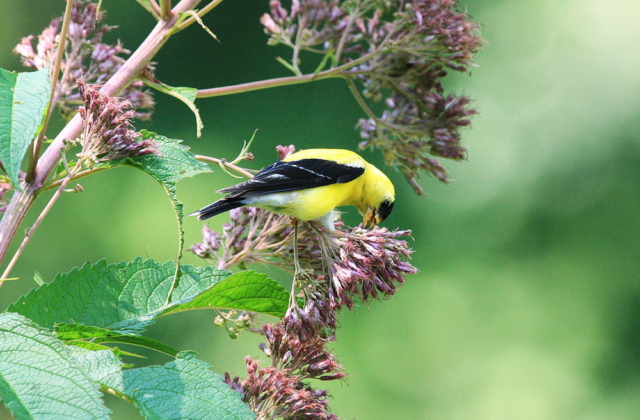
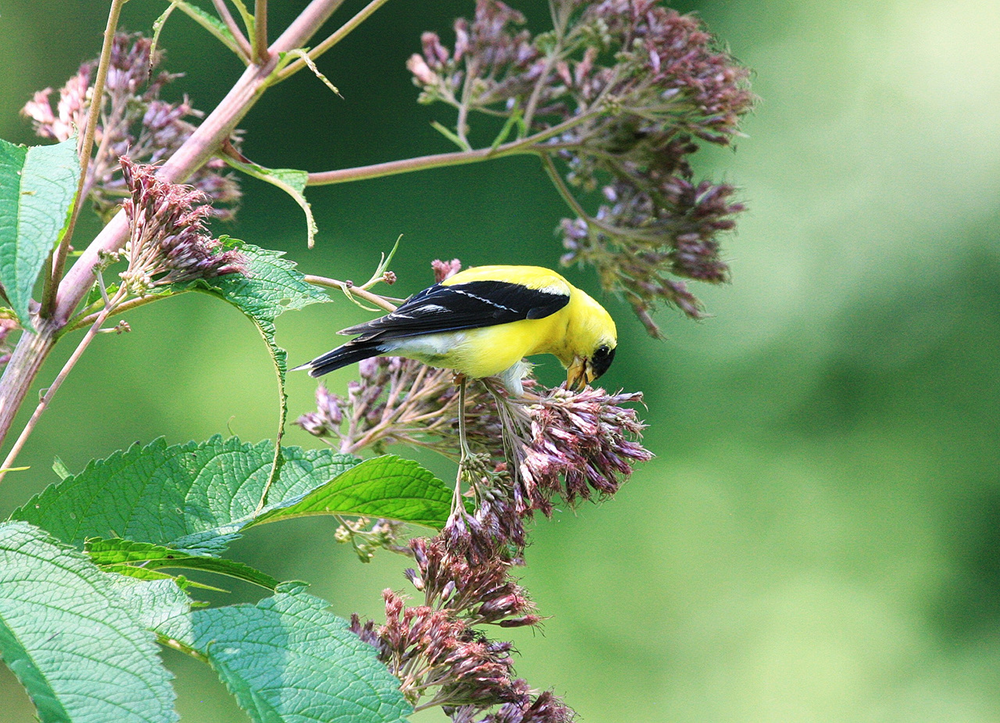
Joe-Pye weed may be a looker, but she has excellent value for biodiversity as well, producing loads of nectar over an extended period for butterflies, moths and long-tongued bees. It’s also the larval host to the Pearl Crescent butterfly and Clymene moth, among dozens of other moths and butterflies. Seed heads feed the birds while beneficial insects overwinter in the hollow stems—so don’t cut back until spring. So, if you have a damp area that you don’t know what to do with, this problem-solving plant might just be what you’re looking for.
23-Acre Donation Completes Haystack Woods Project
By Andra Moss
The Foundation for Norfolk Living (FNL) and the Norfolk Land Trust (NLT) have announced the preservation of 23 acres of forest adjacent to both the new Haystack Woods affordable housing development on Old Colony Road and Haystack Mountain State Park.
From 2019 when FNL initiated efforts to acquire a 38-acre parcel of land—once partially used as a gravel pit—from the Norfolk Land Group, the dual plan had always been conservation and affordable housing. This goal was an important part of the development project when it was presented to and approved by the town and the state, said Kate Briggs Johnson, FNL president. “From the outset, we viewed this property as an opportunity to preserve its beautiful wooded open space.”
With 10 houses—a mix of two- and three-bedroom, energy-efficient homes—now built, the final stage was the conservation of the remaining 23 acres of forest surrounding them. This was officially completed on July 2, 2026, when the acreage was transferred as a donation from FNL to the town’s land trust. The land will extend a protected wilderness corridor linking to the state park.
Libby Borden, NLT Co-President, noted that “The Norfolk Land Trust is thrilled to work with the innovative and solid Foundation for Norfolk Living to combine affordable housing with conservation, which will benefit the entire community.
