IT’S ONLY NATURAL: Conservation Commission and Public Works Team Up on Invasives
By Susannah Wood
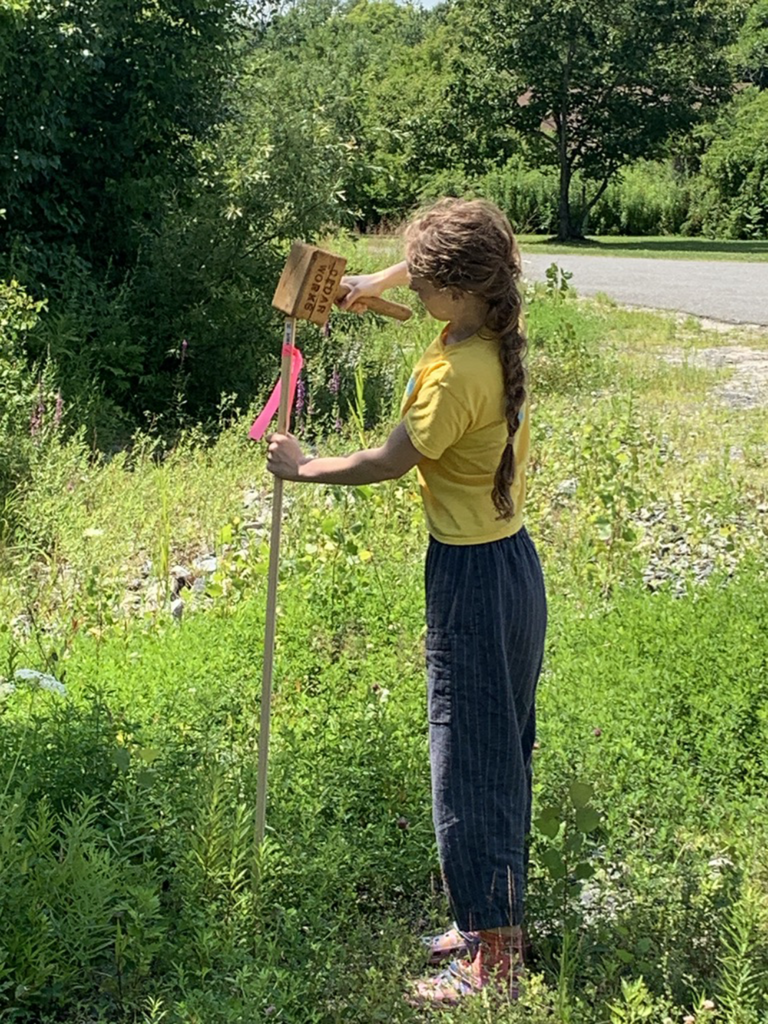
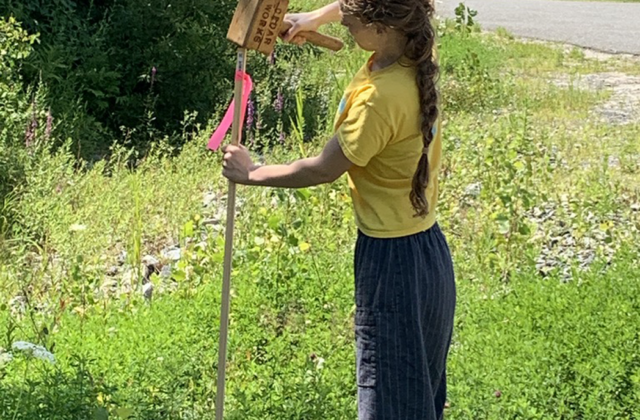
Some residents have been wondering about the pink and blue flagging and strange patterns of mowing along Westside Road and elsewhere in town. It’s all part of an effort to combine regular roadside maintenance and invasive species control.
Norfolk Conservation Commission (NCC) member Becky Eaton began this effort last year, organizing a workshop on invasive plant identification and control basics for Norfolk’s public works crew and those of neighboring towns. Roadsides offer just the right combination of disturbed ground, light and wheeled traffic to make them nurseries for invasive plants that can then spread elsewhere, replacing the native species that underpin Norfolk’s rich ecosystems.
This summer, the commission was able to undertake the mapping of roadside invasives thanks to the essential help of volunteer Sophia Nathanson. Nathanson, a rising sophomore at Williams College, boned up on invasive identification over the spring term and, since early June, has traveled many of Norfolk’s 40 miles of road by bike and car, logging species.
So as not to overwhelm the road crew, the commission decided to concentrate on some of the most aggressive plants, including Japanese knotweed, mugwort, Asiatic bittersweet, common reed grass or phragmites and purple loosestrife. Locations are logged on a mapping application used by Housatonic River Valley Association.
Several of these, including knotweed, loose-strife and phragmites, should not be mowed, as even small amounts of plant material readily sprout into new infestations. Mowing mug-wort is also risky as small pieces of the rhizomes, specialized roots that store nutrients, can also infest new locations. Nathanson and Eaton worked up a marking system for areas not to be mowed—pink tape for “stop mowing” and blue tape for “resume mowing.” The system is also useful to protect areas where mostly native plants are flourishing.
Eaton has worked closely with Troy Lamere and the mowing crew to go over the details
and has been delighted by their willingness to participate in this effort. “Applying best management practices that prioritize maintenance objectives is a challenge,” Eaton said. “The NCC is learning alongside the road crew as we collaborate to develop new mowing regimes that prevent the spread of invasive plants.”