Following the Fall Migration—One Birder’s View
By Jude Mead
Every fall, the skies become highways for millions of migrating birds, many of them traveling hundreds or even thousands of miles to reach their wintering grounds. From tiny warblers and sparrows to hawks, geese and nighthawks, birds rely on a remarkable combination of instinct, environmental cues and, in some species, experience to navigate these long journeys.
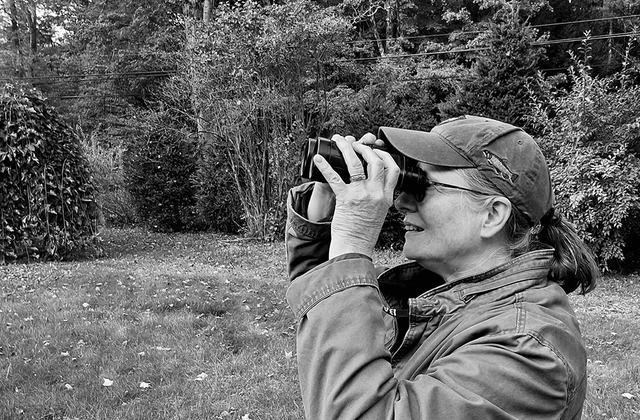
For Laurie Foulke-Green, an avid birder from Sandisfield who works at the Norfolk Library, migration is one of the most exciting times of the year to be outdoors. “The songbirds are migrating now, warblers and sparrows, and I’d suggest to anyone interested to visit the Cornell Lab of Ornithology BirdCast Migration Dashboard,” Foulke-Green said. The dashboard provides information about bird movements across the country and notes that millions of migratory birds fly over Litchfield County at night during the peak fall migration period spanning early September through October.
Birds often appear to have an inherited sense of when to migrate and a general idea of where they need to go. Foulke-Green has learned that many factors can influence migration. Seasonal changes in daylight can trigger hormonal changes that prepare birds for the journey. They also undergo physical changes, and many build up fat reserves that provide energy during flights when food may be difficult to find. In addition to food availability, weather, temperature and wind can all affect the timing of migration.
Many species, including the songbirds, undertake their journeys at night. Nighttime migration is particularly fascinating because birds can use several natural cues to help them navigate, including the stars, polarized light and the earth’s magnetic field, which essentially gives birds a biological compass. Birds migrating in the daylight use familiar landscape features such as coastlines, rivers and mountain ranges to help keep them on course.
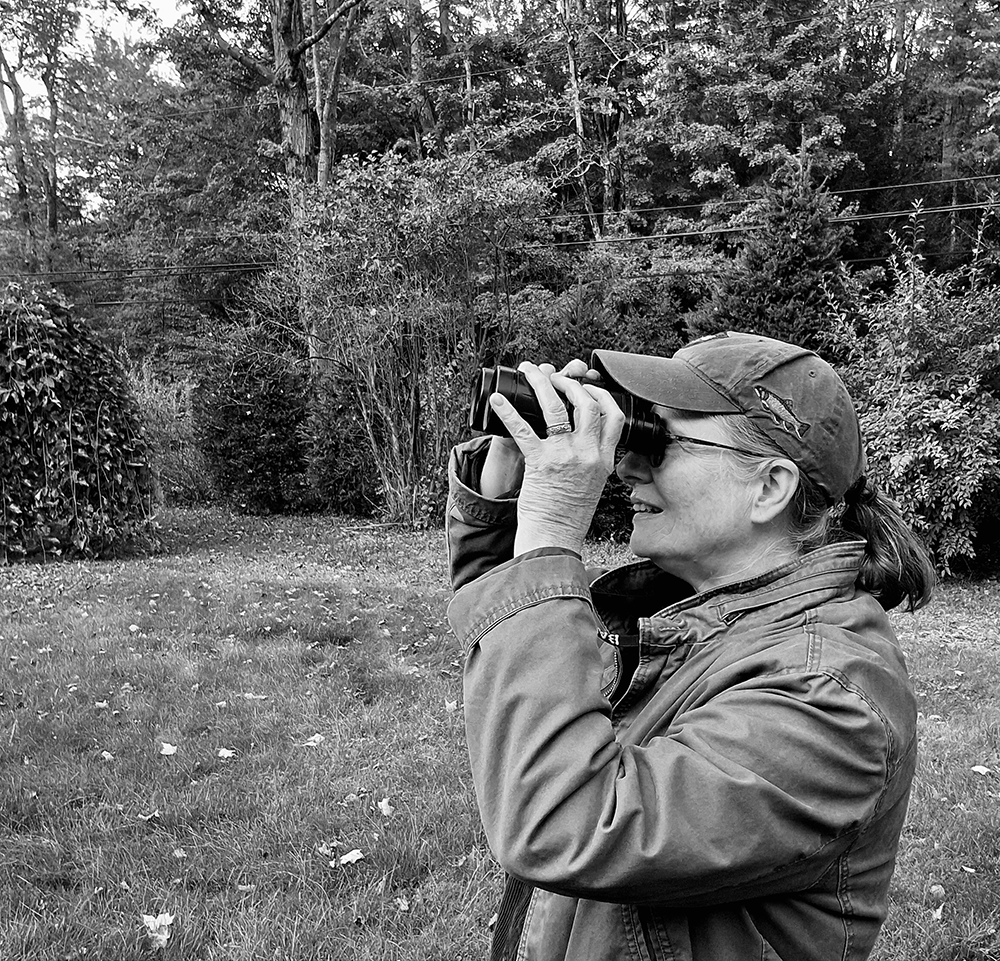
Photo by George Green
“So many species travel at night,” Foulke-Green noted. “But for the hawk migration coming up, you’ll be able to see them through the day, as the air warms and they catch the thermals and travel south.” Foulke-Green explained that thermals, columns of rising warm air, allow hawks and other soaring birds to gain altitude while conserving energy. She added that “during the fall migration, many birders gather on high open hilltops to get a full view of the sky.”
Foulke-Green has had several memorable encounters with migrating birds. “In August I spotted 40 nighthawks over a couple of evenings, and I have heard Canada Geese calling at nighttime,” she said. “But my most exciting observation happened in my own front yard when I looked up and spotted 60 snow geese flying high overhead. That was exciting!”
While migration is a natural part of the lives of many bird species, the journey is not without danger. Birds face severe weather, predators, pesticides and collisions with buildings and windows. Habitat loss presents another challenge because birds need places to stop along their routes. A bird’s migration is not simply a nonstop flight between two destinations. Birds need stopover areas where they can rest, find food and replenish their energy.
Artificial light is also a potential hazard for migrating birds. Bright lights can attract and disorient birds traveling at night, increasing the risk of collisions with buildings and other structures. Homeowners can easily help the birds, said Foulke-Green:
“People just need to turn off bright lights around their homes during the night migration.”
For Foulke-Green, the annual migration is a reminder of just how much these birds accomplish during their lives. “We should all appreciate these birds and be in awe of their long journey to places as far away as Central and South America,” she said. Foulke-Green encourages people to take a closer look at the birds in their own neighborhoods. She recommends downloading the ‘Merlin’ smartphone app and then “Just go walk and find what birds are around you with your binoculars—although they might be a little harder to identify because they are in their fall plumage.”
For anyone willing to step outside and look up, migration can be witnessed in surprisingly simple moments—a hawk circling high above a hilltop, geese calling in the darkness or a flock of birds passing overhead on its way to another part of the continent. Sometimes, all it takes is looking up to appreciate one of nature’s greatest annual journeys. n
