Norfolk Then . . .
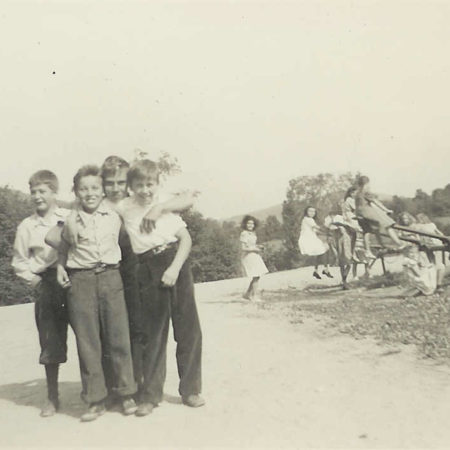
These little rascals – Pete Curtiss, Pat O’Connor, Eddie Kelley and Peter Mulville – are enjoying recess at the Norfolk Center School in the early 1940’s, and you can be sure there’s some mischief behind those big smiles. Center School had been built in 1915 and was located next to the Catholic Church with views […]
Norfolk Then . . .
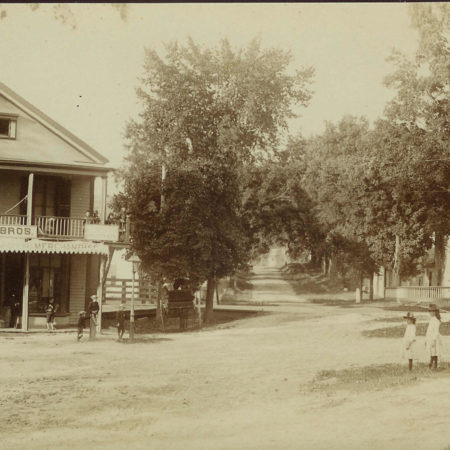
Waiting for the parade? Or the arrival of a train rumbling through the underpass? We don’t know what drew these children to the corner of Greenwoods Road and Maple Avenue around 1890, but fortunately the pace of life was much slower then than it is today at that busy intersection. A horse-drawn carriage is parked […]
Norfolk Then . . .
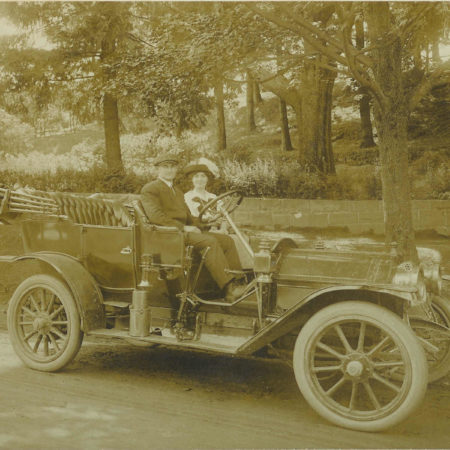
It is August 30, 1913, and newlyweds Hazel and Irving Whiting are setting out for an afternoon drive in their roadster. Hazel Gibbs grew up on Litchfield Road and joined the ranks of the June bride earlier that summer. By virtue of the century in which she lived, Hazel had escaped the clutches of Norfolk’s […]
Norfolk Then . . .
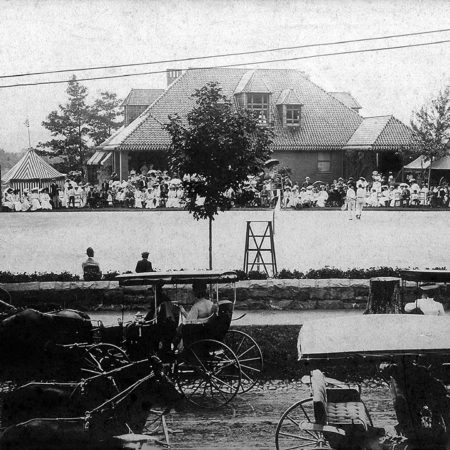
While The Championships, Wimbledon, founded in 1877, may be the oldest tennis tournament in the world, Norfolk had its own attraction: the annual Norfolk, Conn., Open Tournament, beginning in 1895. Heavily advertised in many lawn tennis publications, the tournament was held at the Eldridge Gymnasium (now Town Hall) for three days in August and drew […]
Norfolk Then . . .
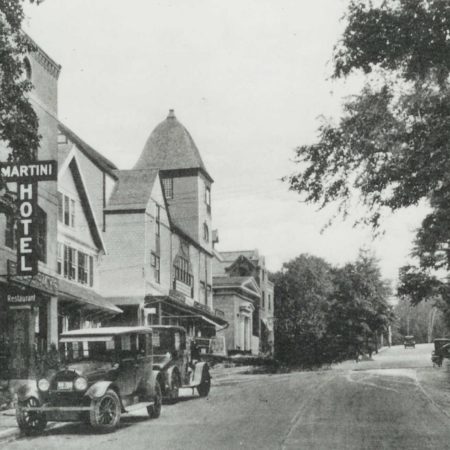
While the sign Martini Hotel may have raised eyebrows during prohibition, it was actually the name of the hotel’s proprietor, Albert Martini. Built in 1913, the four-story steel-framed brick structure brought modern construction to downtown Norfolk and opened as the Wangum Hotel; Wangum Lake was the town’s nearby reservoir. When Martini bought the hotel in […]
Norfolk Then . . .
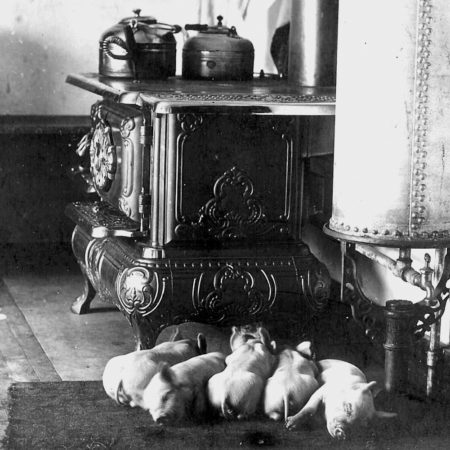
This photograph is one of many Marie Hartig Kendall (1854-1943) took of Norfolk farm scenes around the turn of the last century. Born in France, Marie trained as a nurse at Bellevue Hospital after moving to New York in the 1870s. Before graduating, however, she was dismissed for having become engaged to Dr. John C. […]
Norfolk Then . . .
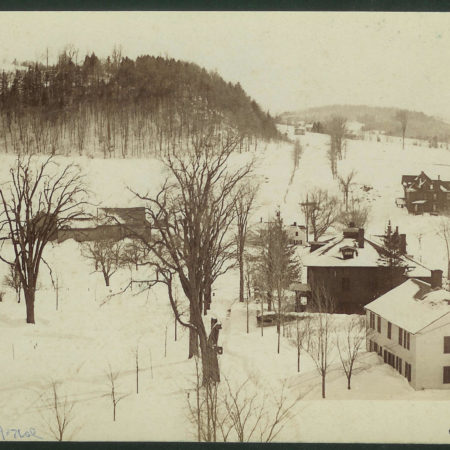
From Mother Goose to Ogden Nash, March winds have been the poet’s muse. In the familiar nursery rhyme, they bring April showers and May flowers. In 1888, however, March winds brought in the biggest blizzard to hit the Northeast in recorded history. Beginning on March 12, the storm lasted three days and crippled the region […]
Norfolk Then: Ice blocks from the “Icebox”
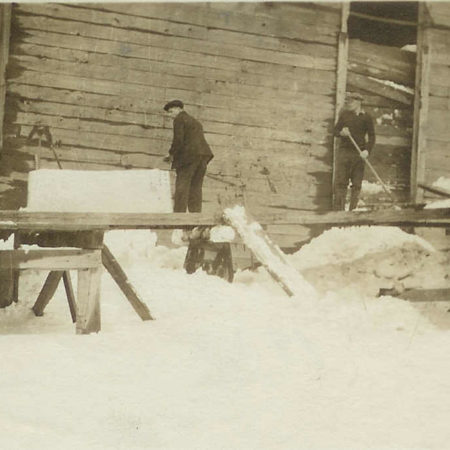
Harvesting ice was an important industry in Norfolk before the advent of mechanical refrigeration, and frozen ponds were kept free of snow not for skating, but to keep the ice from getting soft before the harvest. The Norfolk Ice Company operated on Pond Hill Pond, just east of town. There the ice froze especially thick; […]
Norfolk Then . . .
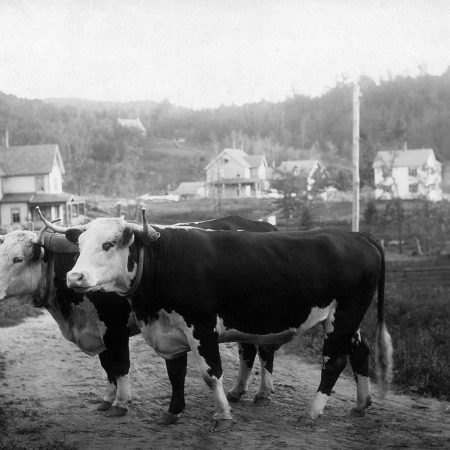
Look carefully and you may recognize most of the houses in this photograph, although it is unlikely you will see oxen on Grant Street today. This handsome pair belonged to Thomas Carroll whose house is pictured at the right. Grant Street was one of the many streets that were opened in Norfolk at the end […]
Norfolk Then . . .
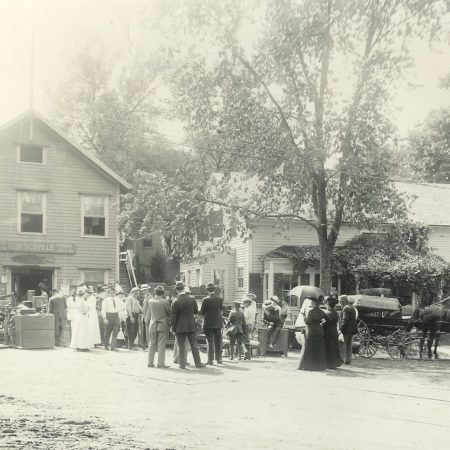
The auction is about to begin, as potential buyers browse among an assortment of furniture in front of George W. Scoville’s store on Greenwoods Road near the corner of the Green. Scoville was a dealer in furniture and upholstery as well as town undertaker and funeral director. The store no longer stands, but Scoville’s house, […]
